Yes, graphic designers can work from home. Graphic design is one of the creative professions that can be performed remotely, especially when the work involves digital assets such as social media graphics, branding materials, advertisements, website visuals and marketing content. Designers can communicate with clients, receive briefs, share concepts and deliver final files online without being physically present in an office.
This flexibility has made graphic design an interesting career option for students, graduates, freelancers and professionals looking for a career change. It can also be a practical option for people who want to return to work after a career break.
However, working from home is not the only reason to consider graphic design. The field offers several specializations, career paths and employment models. Understanding these options can help you decide whether graphic design is the right career for you.
But working from home is only one part of the picture.
If you're considering graphic design as a career, you may also want to know which specialisation to choose, whether graphic design is suitable for career switchers, what skills you need and whether it can be a good career option for women.
Let's break it down.
Can Graphic Designers Work From Home?
Graphic designers can work from home as full-time employees, freelancers, contractors or independent professionals. The exact working arrangement depends on the employer, type of design work and level of collaboration required.
Many common graphic design tasks are completely digital. A designer can receive a creative brief through email or project management software, create the required designs, share them with the team, make revisions and submit the final files online.
Some of the graphic design work that can be done remotely includes:
Logo and brand identity design
Social media creatives
Digital advertisements
Website graphics
Presentation design
YouTube thumbnails
Marketing materials
Infographics
Packaging concepts
Editorial design
Remote graphic design does require more than creative ability. Designers need to communicate clearly, manage deadlines, understand briefs and handle feedback without constant face-to-face interaction.

Remote Graphic Design vs Office-Based Graphic Design
Factor | Remote Graphic Design | Office-Based Graphic Design |
Work location | Home or another remote location | Office or studio |
Client communication | Mostly online | Online and in person |
Flexibility | Usually higher | Depends on company |
Collaboration | Video calls and digital tools | Direct team interaction |
Freelance opportunities | High | Usually limited |
Work schedule | May offer more flexibility | Usually fixed |
Suitable for | Freelancers, remote employees, independent designers | Agency and in-house teams |
Remote work can offer flexibility, but it is not automatically easier. A designer working from home still needs to meet deadlines, attend meetings and deliver professional-quality work.
Why Is Graphic Design Suitable for Remote Work?
The nature of modern graphic design makes remote work possible. Most design projects are created and delivered digitally, and cloud-based tools allow designers and clients to collaborate from different locations.
A brand in Dubai, for example, can work with a designer based in Kerala. A startup in Bengaluru can hire a freelance designer from Kochi. A digital marketing agency in Kozhikode can collaborate with designers working from different cities.
This means graphic designers are no longer limited to opportunities available in their immediate location.
For designers in Kerala, this can open opportunities beyond the local market. Instead of looking only for graphic design jobs in Kochi, Kozhikode or Thiruvananthapuram, designers can apply for remote positions with companies across India and international clients.
What Does a Remote Graphic Designer Do?
A remote graphic designer performs largely the same design responsibilities as an office-based designer. The main difference is how communication and collaboration take place.
A typical project may follow this process:
Brief → Research → Concept → Design → Client Feedback → Revisions → Final Delivery
For example, a company launching a new product might ask a designer to create social media advertisements. The designer first understands the target audience, product message, brand guidelines and campaign objective. They then develop concepts, create the designs, receive feedback and make revisions before delivering the final files.
A professional designer is therefore not simply someone who knows Photoshop or Illustrator. They need to understand why a design works, who it is intended for and what it needs to communicate.
Which Graphic Design Specialisation Is Best for Career Switchers?
There is no single graphic design specialisation that is best for every career switcher. The right choice depends on your previous experience, interests and the type of work you want to do.
Some specializations are particularly worth exploring.
Brand Identity Design
Brand identity is a strong option for people who enjoy concepts, visual storytelling and creating consistent brand systems.
Brand designers may work on logos, colour palettes, typography, packaging, brand guidelines and marketing materials.
Someone with a background in marketing, communications or business may find this area especially interesting because their existing knowledge of audiences and brands can complement their design skills.
Social Media Design
Social media design is suitable for people who enjoy fast-moving digital content and visual communication.
Designers may create Instagram posts, story graphics, campaign creatives, advertisements and promotional content.
This specialization can also be useful for people who want to combine graphic design and digital marketing.
Advertising Design
Advertising designers focus on creating visuals that attract attention and communicate a specific message.
Unlike purely decorative design, advertising requires an understanding of audience psychology, messaging and marketing objectives.
A designer may create multiple versions of an advertisement to test which visual or message performs better.
UI Visual Design
Graphic designers who are interested in websites and applications can explore UI design.
UI design focuses on the visual aspects of digital interfaces, including layouts, typography, colours, buttons, icons and other interface elements.
Graphic designers who develop UI skills can eventually move towards broader UI/UX design roles.
Packaging Design
Packaging design combines creativity with practical requirements. Designers need to consider the product, target audience, brand identity, printing requirements and physical dimensions.
It can be a good specialization for designers who enjoy working with physical products and branding.

Graphic Design Specialisation Comparison
Specialization | Best suited for | Common Projects |
Brand Identity | Conceptual thinkers | Logos, brand guidelines, visual identity |
Social Media Design | Digital creatives | Posts, stories, campaign creatives |
Advertising Design | Marketing-focused designers | Digital ads, campaign visuals |
UI Visual Design | Digital product enthusiasts | Website and app interfaces |
Packaging Design | Product and branding enthusiasts | Boxes, labels, product packaging |
A career switcher does not need to commit to one specialization immediately. Learning the fundamentals first and experimenting with different types of projects can help you discover which area suits you best.
Is Graphic Design a Good Career for Women?
Graphic design can be a good career option for women who enjoy creative work and want access to different working arrangements.
The profession itself is not restricted by gender. What matters most is design ability, communication, professional experience, portfolio quality and the ability to understand client or business requirements.
One reason graphic design can appeal to women is the variety of ways the career can be structured. Depending on the employer and role, designers can work full-time, part-time, remotely, in hybrid positions or independently as freelancers.
This flexibility can be useful for professionals balancing career goals with other responsibilities.
It can also make graphic design worth considering for women returning to work after a career break. Instead of immediately committing to a full-time office role, someone can begin by updating their skills, creating portfolio projects and exploring freelance or remote opportunities.
However, remote work should not be presented as a guarantee. The availability of work-from-home opportunities depends on the company, role and experience level.
Can You Become a Graphic Designer After a Career Break?
Yes, a career break does not prevent you from developing graphic design skills or entering the industry.
The most important step is to demonstrate that your skills are current.
For example, someone who previously worked in marketing could combine their marketing experience with new graphic design skills. Someone from education, administration or another non-design field can also transition by learning design fundamentals and developing a portfolio.
A career restart can follow a simple progression:
Learn → Practise → Build a Portfolio → Gain Experience → Apply for Jobs or Freelance Projects
Recent projects are particularly useful because they give recruiters evidence of your current capabilities.
Instead of focusing only on why you were away from work, your resume and portfolio should show what you can do now.
What Skills Do You Need to Become a Graphic Designer?
Learning design software is important, but software alone does not make someone a good graphic designer.
A professional graphic designer needs a combination of creative, technical and communication skills.
Design fundamentals
You should understand principles such as:
Typography
Colour theory
Composition
Contrast
Balance
Alignment
Spacing
Visual hierarchy
Design software
Depending on your specialization, commonly used tools include Adobe Photoshop, Illustrator, InDesign, Figma and Canva.
You don't need to master every design tool at once. Start with the software that matches your career direction.
Creative problem-solving
Design is often about solving a communication problem visually.
A client may say, "We need a social media campaign that feels premium."
The designer has to translate that unclear requirement into typography, colours, imagery, layout and visual direction.
Communication
Graphic designers regularly communicate with clients, marketing teams, copywriters and developers. Being able to understand a brief and explain design decisions is an important professional skill.
Can You Become a Graphic Designer Without a Degree?
Yes. A formal design degree can provide structured education, but it is not the only route into graphic design.
Graphic design is heavily influenced by practical ability and portfolio quality. A candidate with a strong portfolio and relevant skills can demonstrate their capabilities even if their academic background is unrelated to design.
For example, a graduate with a degree in English, commerce or engineering can learn graphic design and build projects that demonstrate their abilities.
A beginner portfolio could include:
Logo concepts
Brand identity projects
Social media campaigns
Poster designs
Advertisement creatives
Packaging concepts
Website visuals
Presentation designs
Personal projects are a legitimate way to begin building a portfolio. Just make it clear when a project is a personal or practice project rather than paid client work.
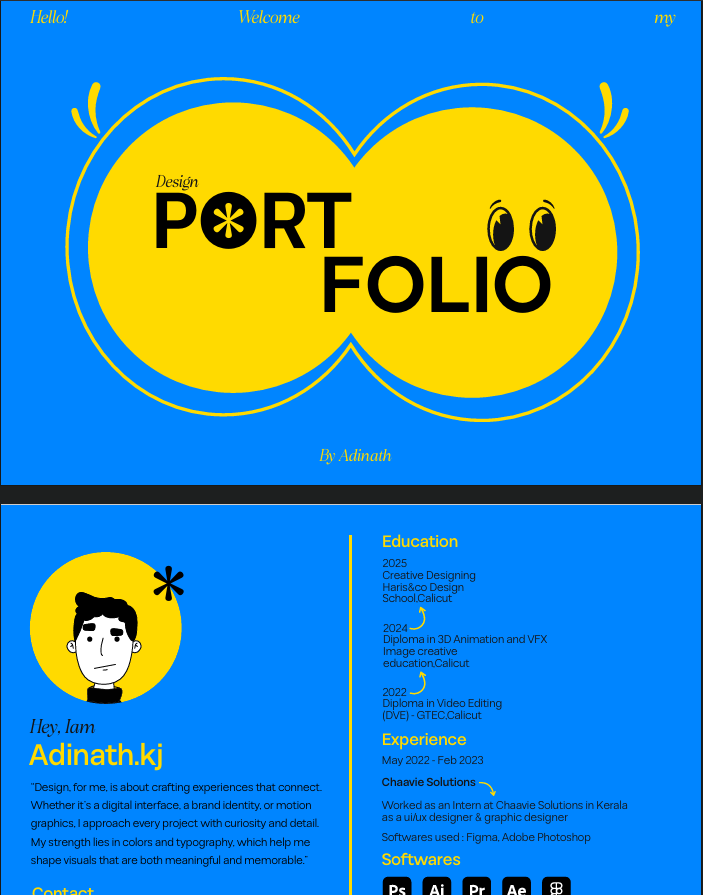
How to Build a Graphic Design Portfolio for a Remote Career
A strong portfolio is particularly important when applying for remote jobs because the employer may never meet you in person before reviewing your work.
Don't simply upload dozens of designs. Choose projects that demonstrate different skills and explain the thinking behind them.
For each project, include:
Objective: What was the design supposed to achieve?
Research: Who was the target audience?
Concept: What creative direction did you choose?
Execution: Which tools and techniques did you use?
Final outcome: What did the finished design look like?
For real client projects, you can also include measurable outcomes when the information is available.
A portfolio that explains your process can demonstrate much more than a gallery of attractive images.
How Can Beginners Find Remote Graphic Design Jobs?
Once you have basic skills and a portfolio, start looking for entry-level opportunities.
Useful places to search include:
LinkedIn
Job portals
Company career pages
Design agencies
Creative studios
Startups
Freelance platforms
Professional networks
You can also contact agencies directly and ask whether they have openings for junior designers or interns.
For freshers, internships can be an effective way to gain experience with real briefs, deadlines, feedback and clients.
Don't wait until your portfolio is perfect. Build it, improve it and start applying at the same time.
Can Graphic Designers Freelance From Home?
Yes. Freelancing is one of the most common ways graphic designers work remotely.
A freelance designer can work with businesses, agencies, creators and individuals on projects such as logos, social media designs, presentations, advertisements and brand identity.
However, freelancing requires more than design skills.
You also need to learn how to:
Find clients
Understand project requirements
Prepare quotations
Set deadlines
Manage revisions
Communicate professionally
Deliver files correctly
Build long-term client relationships
For beginners, starting with smaller projects can help develop both design and client-management experience.

How Long Does It Take to Learn Graphic Design?
There is no universal timeline because learning speed depends on your starting point, practice routine and career goal.
Someone learning graphic design for social media content may need a different skill set from someone aiming to become a brand identity designer.
A practical learning journey could look like this:
Stage | Focus |
Beginner | Design principles and basic tools |
Developing | Practice projects and different design styles |
Portfolio | Creating focused case studies |
Entry-level | Internships, freelance projects and junior roles |
Specialisation | Developing advanced skills in a chosen area |
The important thing is not how many tutorials you complete. It is whether you can independently solve design problems.
Where Can You Learn Graphic Design in Kerala?
For learners in Kerala, graphic design courses can provide a structured way to learn design fundamentals, software and practical project work.
HACA Design School offers design-focused training for students, graduates, aspiring designers and career switchers. A practical learning approach can help learners move beyond simply understanding design tools and start building projects that can be presented in a professional portfolio.
If you're considering graphic design as a career, compare courses based on their curriculum, practical projects, portfolio development, trainer experience and career support rather than choosing only based on course duration or certification.
Final Thoughts
Graphic design can absolutely be a work-from-home career, but remote work should be viewed as an outcome of building valuable skills rather than the main goal.
If you want to work remotely, you still need to become good at your craft, communicate professionally, meet deadlines and maintain a portfolio that demonstrates your ability.
For career switchers, graphic design offers several paths, from brand identity and social media design to advertising, UI design and packaging. You can build on your previous professional experience while developing a new creative skill set.
For women, the combination of creative work and different employment models, including remote and freelance opportunities, can make graphic design an appealing career to explore.
The strongest starting point is simple: learn the fundamentals, practise consistently, build meaningful projects and create a portfolio that shows what you can do.
Your location may determine where you live. Your design skills can determine where you work.