Isham’s journey into branding did not begin with a clear career plan. A native of Thalassery, Kerala, he had just completed his Plus Two education and was unsure about what to do next.
He explored different creative fields, learned new skills and put effort into each one. But nothing seemed to hold his interest for long.
That changed when he discovered branding.
What started as another area to explore gradually became a field he wanted to understand in depth. His journey also taught him an important lesson: being able to design something and knowing how to build a brand are two very different things.
Finding His Direction Through Creative Exploration
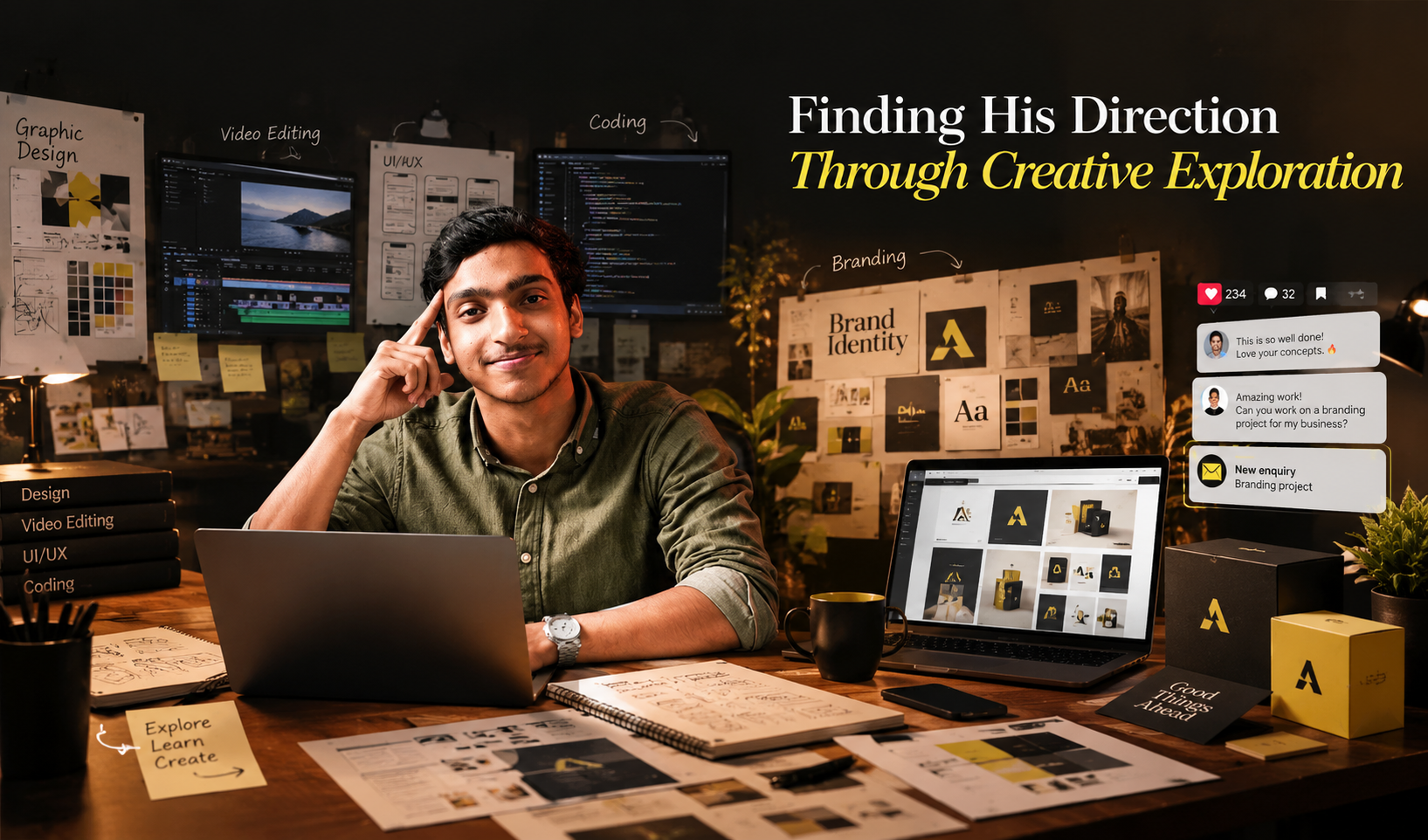
After completing Plus Two, Isham did not have a clear idea of which career to pursue. Rather than waiting for the right opportunity to appear, he decided to try different creative fields.
He enrolled in a three-month graphic design course, explored video editing, completed Google's UI/UX design course and even tried coding. He gave each area a serious effort, but none of them created the interest he was looking for.
Then he came across branding. For Isham, branding offered something different. There was a larger process behind the work, and he wanted to understand it.
He started creating branding concepts and posting them on social media every day.
Initially, his posts received little attention. But he continued creating and sharing his work without worrying too much about who was watching. Gradually, people began noticing his concepts, leaving comments and sending positive messages.
Eventually, the attention led to something more valuable: client enquiries.
When a 2 Lakh Project Revealed a Bigger Challenge
One of Isham’s early breakthroughs came through an Instagram message from a prospective client in Spain.
The client liked his work and wanted to collaborate with him on a brand identity project. The proposed scope included a logo, visual design elements and a colour palette.
At that stage, Isham had only recently started exploring branding. He had limited experience with professional proposals, pricing and client negotiations.
To prepare his proposal, he turned to ChatGPT and online resources. He used them to organise his ideas, present his services professionally and understand how to discuss pricing with a potential client.
The client agreed to a proposed fee of 2 Lakh, which Isham understood to be worth approximately ₹2 lakh at the time.
For someone at the beginning of his branding journey, it was a significant opportunity.
But the next step made him realise that securing a client was only part of the job.

Why Technical Skills Were Not Enough
After discussing the project, the client requested a video meeting to talk about the strategy and the project rollout.
This was where Isham faced a challenge he had not fully anticipated.
He was learning to create visual identities, but he was not yet confident about leading a professional client discussion, explaining the strategic reasoning behind his work or communicating comfortably in English. Working with an international client also meant navigating language and communication differences.
He began to question whether he was ready to handle the project at the level the client expected.
Eventually, he decided not to proceed with the opportunity.
It was a difficult decision, particularly when the project involved a fee of around ₹2 lakh. However, the experience helped him recognise the difference between having a technical skill and being prepared to deliver a complete professional service.
Design execution involves creating the visual elements of a brand. Strategic branding also requires understanding the client's business, researching the target audience, identifying the brand's position in the market and explaining why particular creative decisions make sense.
Client communication connects these two parts. Without it, even a well-designed identity can become difficult to present, justify and deliver effectively.
For Isham, the missed opportunity became a turning point. Instead of focusing only on improving his design skills, he wanted to understand the complete branding process.

Looking for a Way to Learn Branding Properly
After the experience with the Spanish client, Isham found himself unsure about what to learn next. He knew he needed to improve, but branding involved far more than he had initially understood.
While working in Bangalore, he came across an advertisement for HACA Design School's online branding programme.
The opportunity caught his attention because it focused on the area he wanted to pursue. He attended a demo session, found the subject interesting and decided to join.
This time, he was not exploring another creative skill simply to see whether it suited him. He had a clearer goal: to understand branding in depth and become more capable of handling projects from the initial strategy to the final design.
Discovering What Goes Into Brand Strategy
Before joining the programme, Isham had a narrower understanding of branding. He had experience creating visual concepts, but he had not fully explored the research and strategic thinking that should guide them.

Through his learning experience at HACA, he began to understand how several elements come together to build a brand.
These included:
Research: Understanding the market, audience and context in which a brand operates.
Brand strategy: Defining what the brand stands for and how it should be positioned.
Moodboarding: Establishing a visual direction that supports the brand's intended personality.
Psychology: Exploring how people interpret visual choices, ideas and messages.
Storytelling: Building a meaningful connection between the brand and its audience.
Visual identity: Translating the strategy into a consistent visual system.
The experience changed how he approached design. Instead of starting with a logo or visual style, he began to consider the thinking that should come before the design itself.
He also recognised that branding was a much broader field than he had imagined. There were more ideas to explore, more questions to ask and more ways to connect creative decisions with human behaviour.
For Isham, this deeper understanding made branding even more interesting.
Choosing Learning Over Staying Comfortable
As Isham progressed through the programme, he began thinking about how he could put his learning into practice.
At the time, he was working in Bangalore. However, he felt that he needed to dedicate more attention to completing his branding project and applying what he had learned.
He decided to resign from his job, return home to Kerala and focus on finishing the project.
It was a significant step, but his priorities had become clearer. He had found a field he genuinely wanted to pursue, identified the skills he needed to develop and started building a more structured approach to his work.
Once he returned home, he began working on his project and made completing it his immediate goal.
Putting Brand Strategy Into Practice With REMO
For his project, Isham chose to develop a brand identity for sports apparel.
The sportswear market already had established brands with recognisable identities and strong storytelling. He needed to find a concept that could give his project a distinct direction rather than simply create another sportswear logo.
His starting point was discipline.
Athletes and people who take sports seriously often rely on routines, consistency and repeated effort. Isham saw an opportunity to build the brand around this idea and use it to shape the identity.
Rather than treating discipline as just another marketing message, he explored what it meant in practice.
Discipline involves repeating actions every day. A routine ends, but the next one begins. Each completed cycle creates an opportunity to continue improving.
This observation became the foundation of his brand-naming process.
How the Name REMO Came About
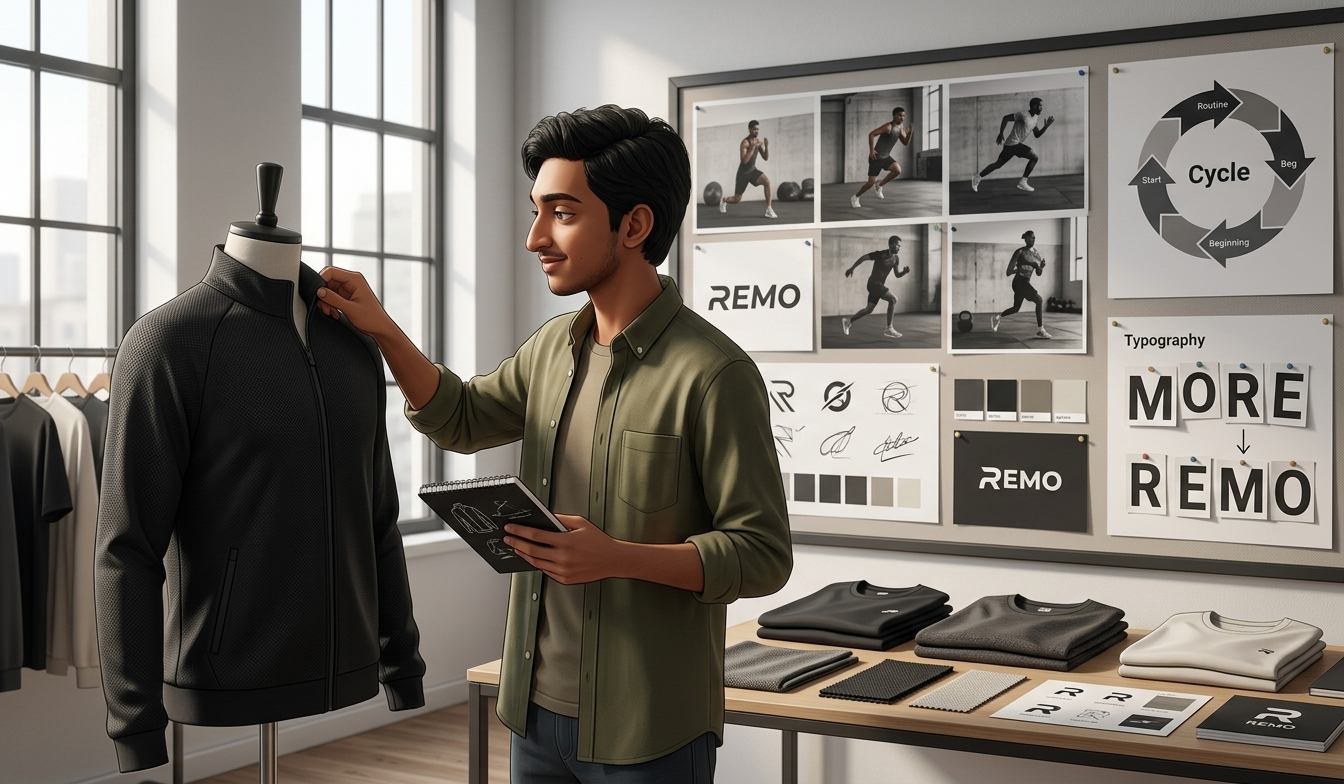
Isham wanted a name that reflected the idea of repetition and continuous progress.
He started with the word MORE, which represented the idea of doing more and continuing to improve. He then rearranged its letters, turning MORE into REMO.
The name reflected the cycle he wanted the brand to represent: an ending that becomes a new beginning.
This gave the name a connection to the brand's central idea rather than making it an arbitrary label.
The concept also helped guide the visual identity. Isham wanted the design to feel focused and purposeful, without unnecessary elements competing for attention.
The visual direction was built around the idea of cutting through distractions and staying committed to the work.
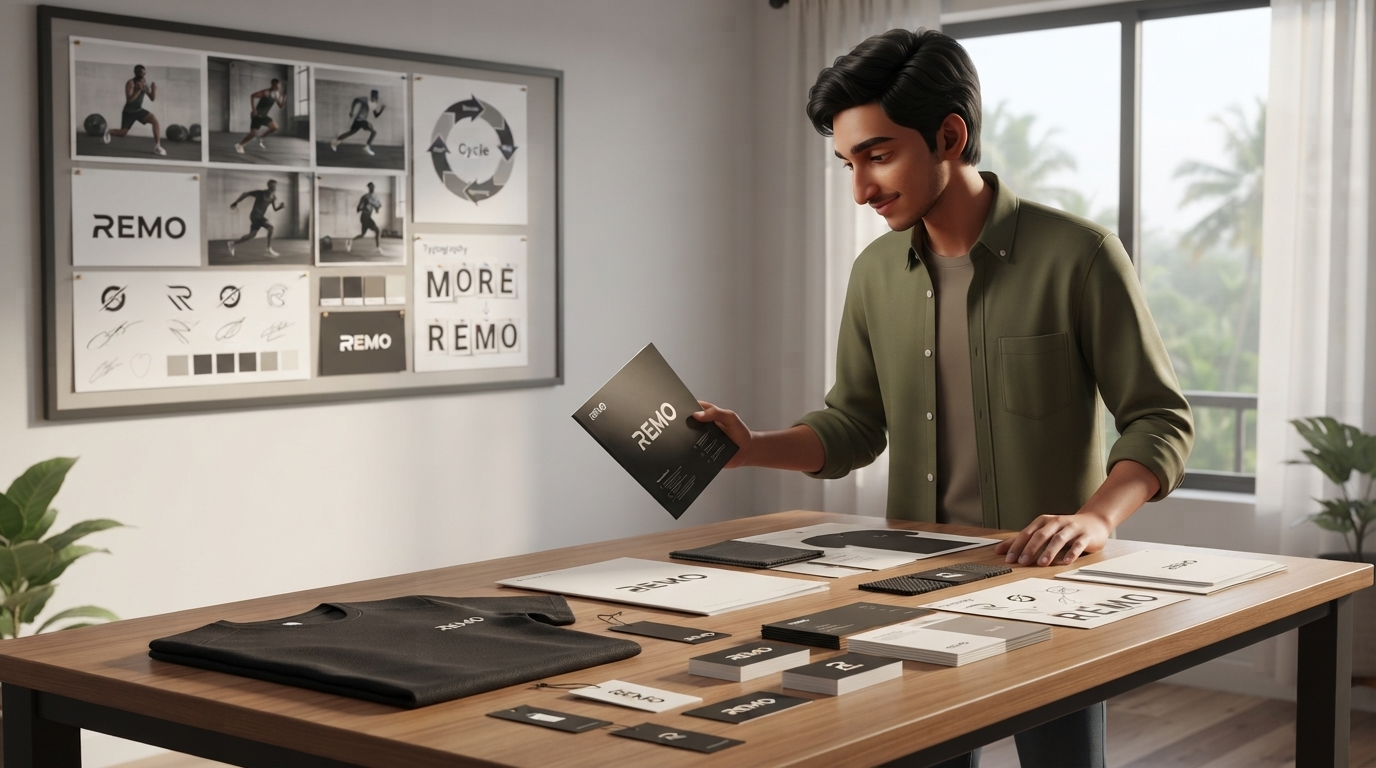
Through REMO, he applied several aspects of strategic branding in one project: identifying a central idea, developing a name around it, connecting that name to a story and translating the story into a visual identity.
The project helped him move beyond designing individual assets towards thinking about how every creative decision could support the same brand message.
Completing the Project With a Clearer Approach
One of the differences Isham noticed while working on REMO was how he approached the process itself.
Earlier, he had struggled to understand what a complete branding project required. He could create visual concepts, but he did not have the same clarity about the research, strategic decisions and conceptual development that should support them.
After learning more about branding, he had a clearer direction for the project.
He started with the central idea of discipline, explored how it could distinguish the brand, developed the name around the concept and carried that thinking into the visual identity.
According to Isham, he was able to complete the project within the first week of starting it after returning home.
The project was more than an exercise in design. It gave him an opportunity to apply his understanding of branding as a connected process, with strategy and storytelling informing the final visual output.
What Isham Learned Beyond Design
Looking back at his journey, Isham recognised that improving a skill does not automatically prepare someone for every part of a professional career.
His experience with the Spanish client had shown him that technical ability alone was not enough. He also needed to communicate his ideas, understand client requirements and explain the thinking behind his work.
His learning experience at HACA helped him explore the strategic side of branding and identify new areas in which he could continue to grow.
Some of his key takeaways included:
Exploration can help you find the right direction. Trying graphic design, video editing, UI/UX and coding helped Isham discover which field held his interest.
A portfolio can create opportunities. Sharing branding concepts consistently on social media helped him get noticed and receive client enquiries.
Technical skills need to work alongside communication. Professional projects require more than the ability to execute a design. They also involve understanding expectations, discussing ideas and presenting solutions.
Branding starts with an idea, not a logo. Research, positioning, psychology and storytelling help establish the direction a visual identity should follow.
Practical projects help connect learning with execution. Developing REMO gave Isham an opportunity to apply strategic thinking to a complete branding concept.
Isham’s Perspective on Learning and Growth
For Isham, the biggest lesson was that personal development goes beyond completing a course or acquiring a new skill.
He believes people need to understand why they are learning something and how it contributes to their growth. Having a skill is valuable, but knowing how to apply it, communicate its value and continue improving matters just as much.
He also emphasised the importance of finding the right learning environment and being around people who can support personal and professional development.
His experience helped him see branding as a field with room for continuous exploration. Every new client, project or industry can introduce different challenges and opportunities to learn.
Rather than limiting himself to the visual execution of a design, he now had a broader perspective on how research, strategy, psychology and storytelling could shape his work.
From Exploring Creative Fields to Building a Future in Branding
Isham started his journey without a clear career direction. He explored different creative fields, discovered branding and began sharing his work online. That consistency eventually brought him an international client opportunity worth around €2,000.
Although he chose not to take on that project, the experience helped him recognise the skills he still needed to develop.
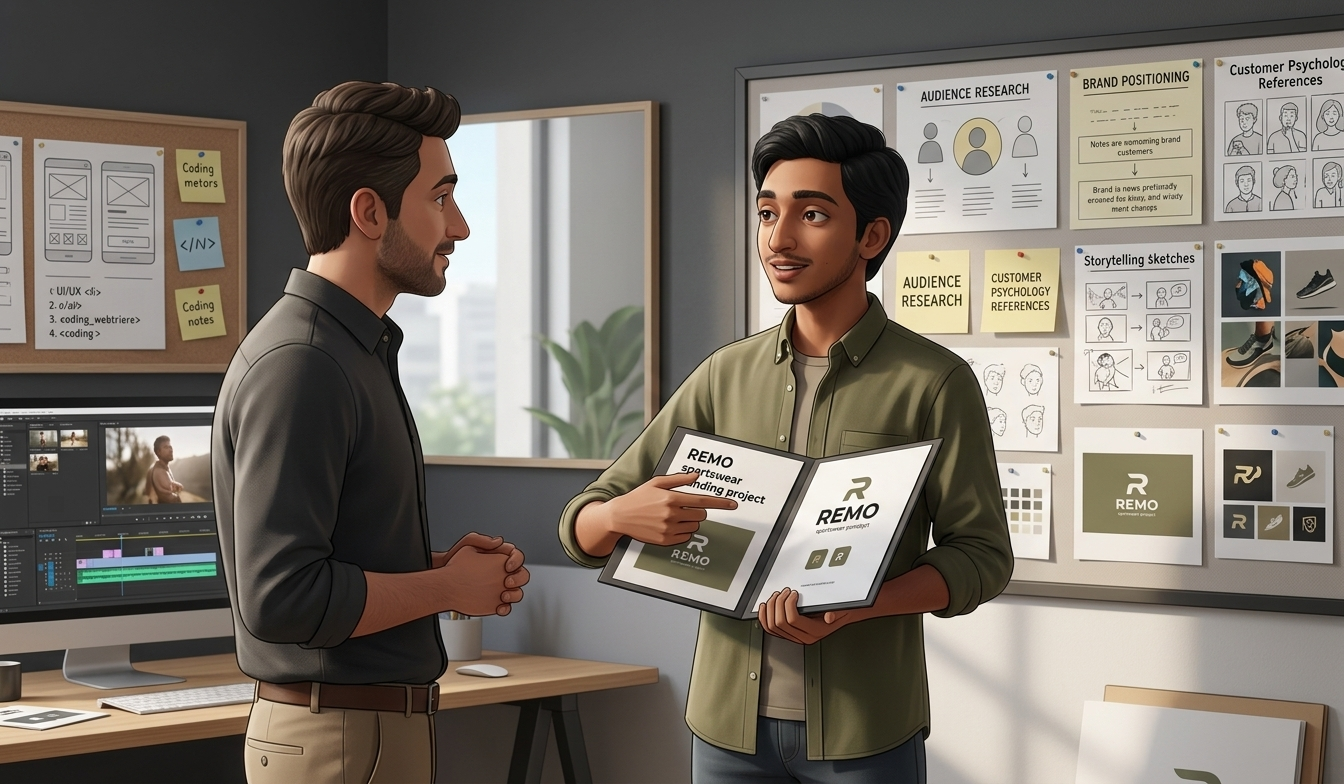
At HACA Design School, he explored the strategic side of branding and applied his learning through REMO, a sportswear brand concept built around discipline and continuous improvement.
His journey is a reminder that career growth is not always about taking every opportunity that comes along. Sometimes, recognising what you need to learn next can be just as important.
For Isham, that meant moving beyond design execution and learning to build brands with purpose, strategy and a clear story.
Hear Isham Share His Branding Journey
Watch Isham talk about his journey from exploring different creative fields to discovering branding, turning down an early international project and applying his learning through the REMO brand identity project.
Watch the full story: https://youtu.be/LIvYPf6EK2g?si=-nm2lzGbkh_N9tys