"Does getting a degree guarantee career readiness, or can practical skills and alternative learning pathways offer a different route to professional growth?"
Let's Discover
Understanding How People Choose Their Learning Pathways
As education and career expectations continue to evolve, people have more ways to build their knowledge and prepare for employment. While some rely on formal degrees, others explore professional certifications, online courses and practical skill-based training.
To understand these choices, HACA Tech School's DA15 students, Amritha K, Aysha V P, Fathimath Safa O, Farhana Sherin, Sahada Yakuth K and Fathimathul Fidha KK, conducted a survey analytics project comparing traditional and non-traditional education.
The study explored what influences people's learning decisions, how they evaluate their educational experiences and whether their chosen pathways provide career clarity and prepare them for real-world work.
Rather than treating one approach as better than the other, the students focused on understanding different learning preferences, personal goals and perceptions of employer expectations.
By collecting and analysing survey responses, the team used data visualisations to explore how people view academic qualifications and practical skills when making decisions about their education and careers.
Defining the Research Objectives
Before analysing the survey responses, the team established objectives to guide the project.
The first objective was to understand which learning pathways respondents had chosen and how traditional education compared with skill-based learning.
The students also wanted to identify the main reasons behind these choices. Some people may pursue formal education to obtain recognised qualifications, while others may choose skill-based programmes to develop practical abilities or prepare for specific career opportunities.
Another objective was to examine participants' satisfaction with their chosen learning pathways. The team explored whether respondents felt their education provided career clarity and prepared them for real-world work.
The project also aimed to understand the importance people gave to qualifications and practical skills from an employer's perspective.
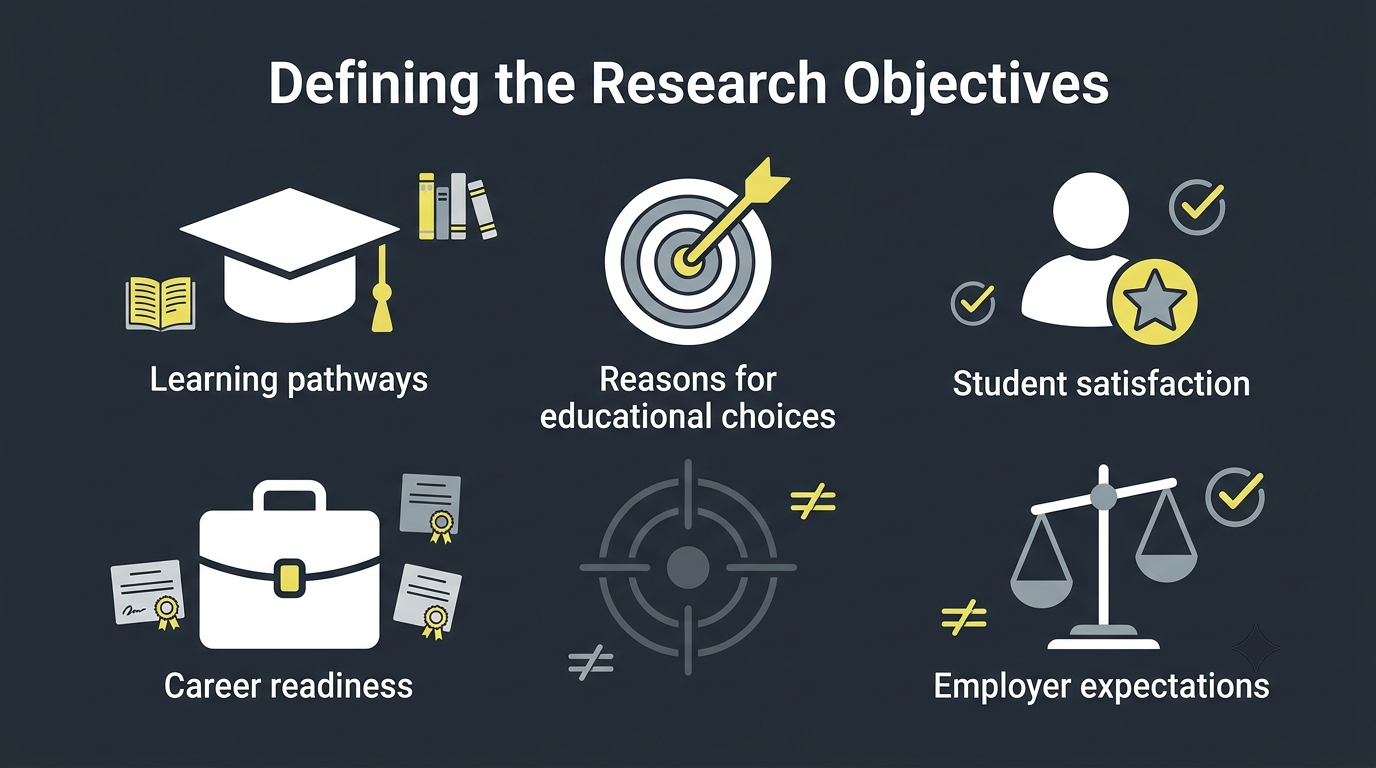
These objectives helped the students examine education from different angles, including learning preferences, personal goals, satisfaction and career readiness.
Designing the Survey and Research Approach
The project began with identifying the research problem and preparing a questionnaire to collect relevant information.
The students designed a survey containing 10 questions to understand participants' educational backgrounds, current status, learning preferences and experiences.
The questionnaire covered several important areas:
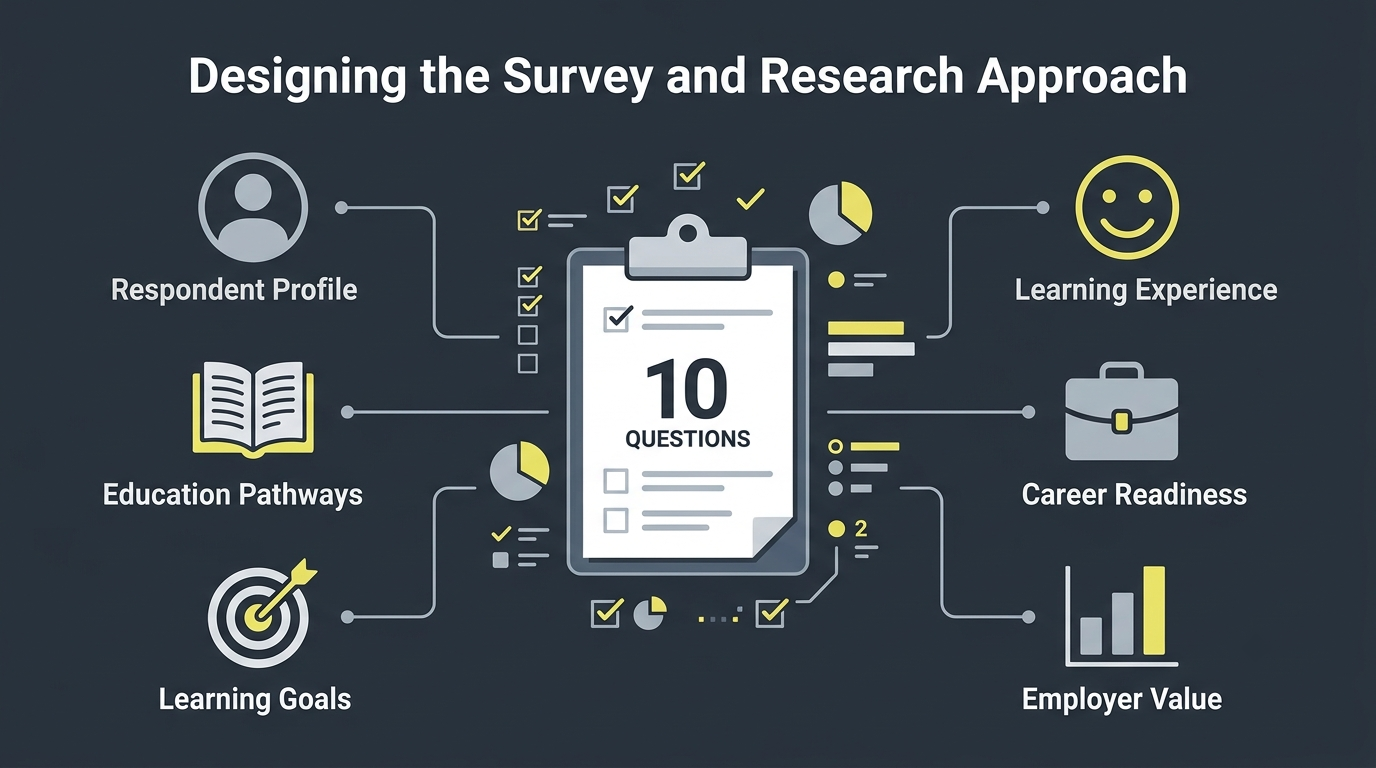
Respondent Profile: Collected information about participants, including their age, gender, educational qualifications, current status and area of residence.
Education Pathways: Examined whether respondents followed traditional education, skill-based learning or both.
Learning Goals: Explored the reasons behind choosing a particular learning pathway, including employment, higher studies, entrepreneurship and other career interests.
Learning Experience: Focused on satisfaction with the chosen pathway and the level of career clarity respondents experienced.
Career Readiness: Examined whether participants believed their education prepared them for real-world work.
Employer Value Perception: Explored whether respondents considered practical skills, academic qualifications or a combination of both more important for employment.
The questionnaire helped the team collect responses across different learning backgrounds and career interests.
By organising the questions around these themes, the students could compare traditional and non-traditional education and examine how respondents viewed their effectiveness.
Collecting and Organising Survey Responses
The project involved collecting survey responses from students, employed individuals, job seekers and other participants.
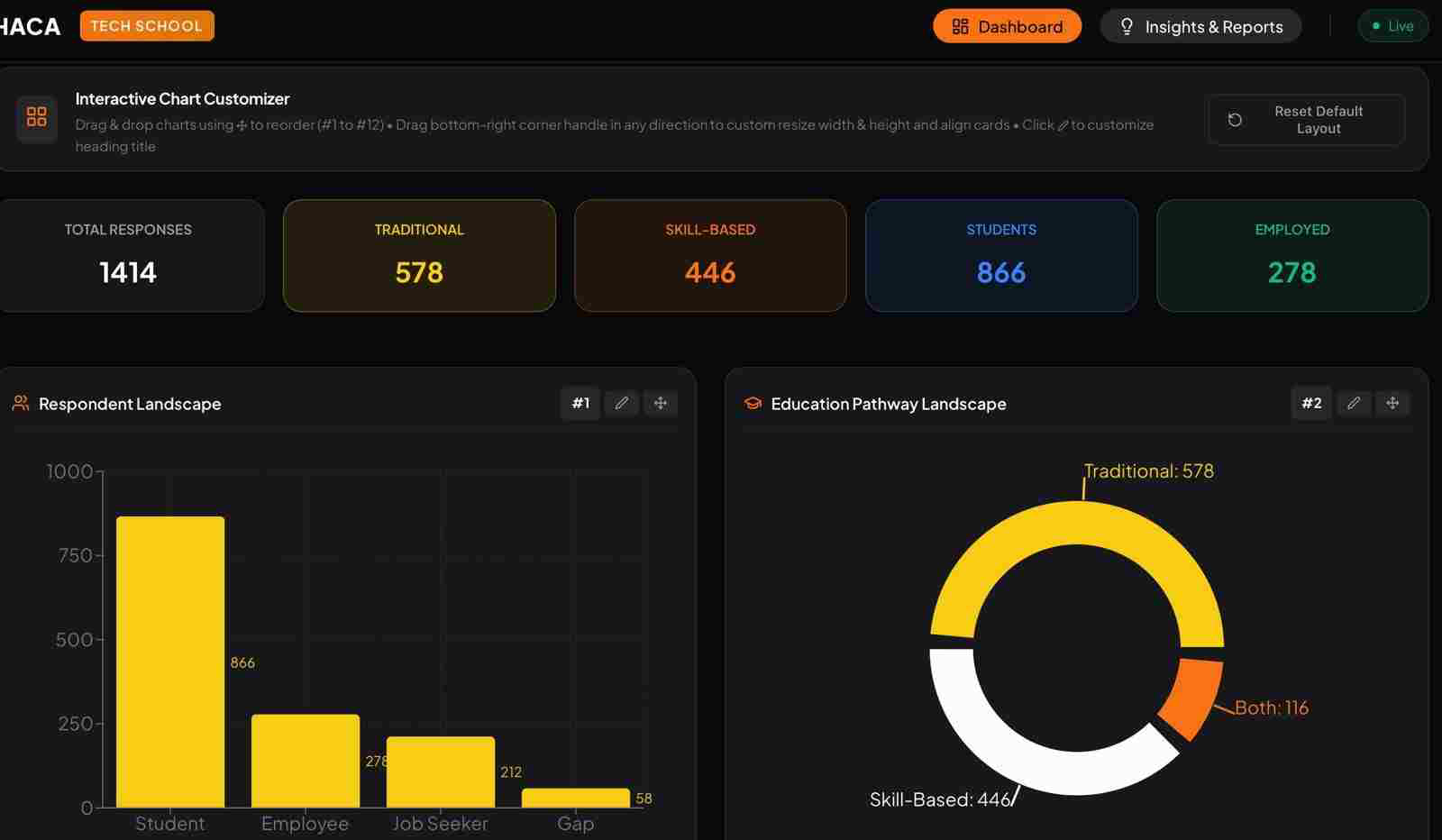
The students organised the responses into relevant categories to make the information easier to understand and analyse.
The dashboard included separate sections for respondent demographics, educational pathways and comparative analysis. It used charts to present response counts and highlight patterns across different categories.
The analysis included:
Comparing traditional and skill-based learning choices.
Understanding the educational and employment backgrounds of respondents.
Identifying the main reasons for choosing a learning pathway.
Examining satisfaction levels across different pathways.
Exploring career clarity and real-world preparation.
Understanding how respondents viewed the importance of skills and qualifications.
This process helped the team turn individual survey responses into organised information that could be explored through visualisations.
Analysing the Survey Results
Understanding the Respondent Profile
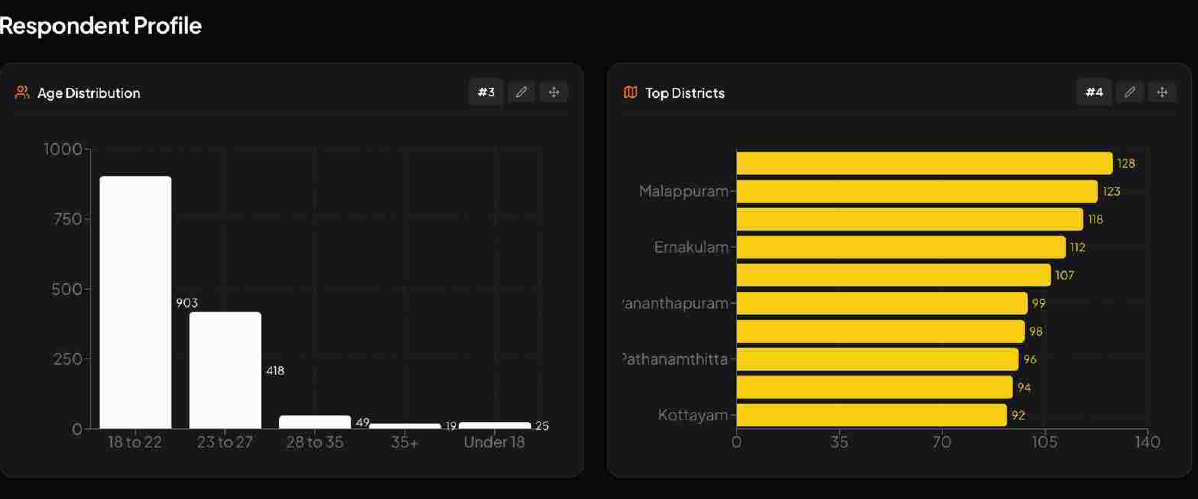
The first part of the dashboard focused on understanding who participated in the survey.
Out of the 1,414 responses displayed, 866 respondents were students, 278 were employed individuals, 212 were job seekers and 58 were grouped under the gap category.
Students formed the largest respondent group, followed by employed individuals and job seekers.
The age distribution also showed that most participants belonged to younger age groups.
The recorded age distribution was:
18 to 22 years: 903 respondents
23 to 27 years: 418 respondents
28 to 35 years: 49 respondents
35 years and above: 19 respondents
Under 18 years: 25 respondents
The gender distribution included 737 female and 677 male respondents.
The educational qualification chart showed that degree holders formed the largest group, with 929 respondents. This was followed by diploma holders (220), higher secondary qualifications (117), postgraduate qualifications (117) and other qualifications (29).
The location analysis also showed participation from both rural and urban areas. The dashboard recorded 776 respondents from rural areas and 638 from urban areas.
These findings provided useful background for understanding the educational choices and experiences shared by the participants.
Comparing Traditional and Skill-Based Learning Pathways
One of the main parts of the project was comparing the number of respondents associated with different learning pathways.
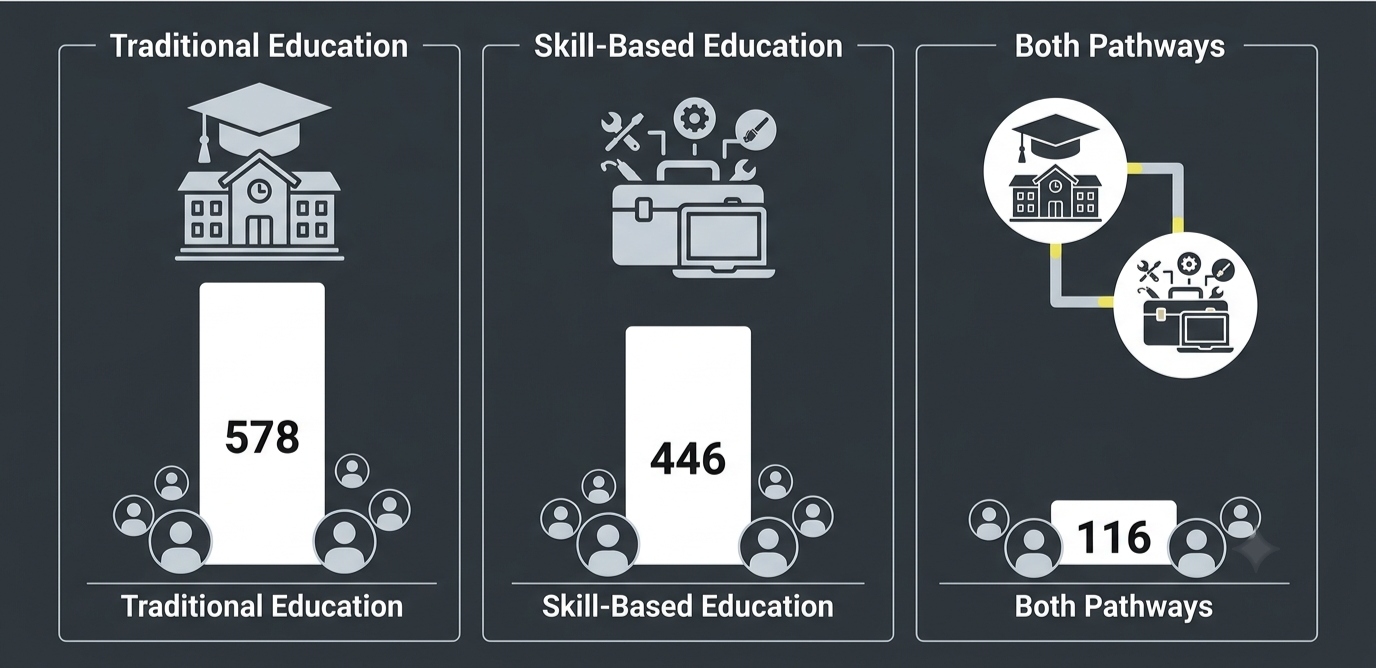
The dashboard recorded:
Traditional education: 578 respondents
Skill-based education: 446 respondents
Both pathways: 116 respondents
Traditional education had a higher recorded count than skill-based education. However, the presence of respondents who selected both pathways showed that learning experiences were not always limited to one option.
Some individuals may follow formal education while also taking professional courses or practical training to develop additional skills.
This comparison helped the students understand that people may approach education through different combinations of structured academic learning and focused skill development.
It also highlighted the importance of considering both pathways when studying how people prepare for employment and future opportunities.
Exploring the Reasons Behind Educational Choices
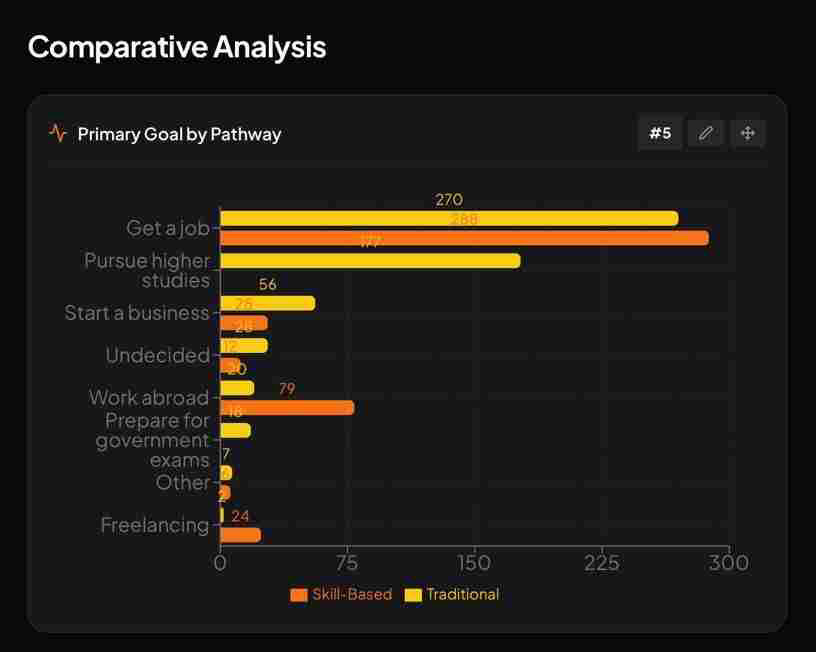
Another important part of the analysis focused on the primary goals associated with traditional and skill-based learning.
The dashboard compared responses across several goals, including:
Getting a job
Pursuing higher studies
Starting a business
Working abroad
Preparing for government examinations
Freelancing
Other goals and undecided choices
Getting a job emerged as a major reason for choosing a learning pathway across both categories.
The comparison also showed that respondents considered other goals, such as higher studies, entrepreneurship and working abroad, when making educational decisions.
These findings suggest that people do not necessarily choose an educational pathway for the same reason. Their decisions may depend on their career plans, personal interests and the opportunities they want to pursue.
For the students, this analysis provided a better understanding of the different expectations people have from education and skill development.
Examining Satisfaction With Different Learning Pathways
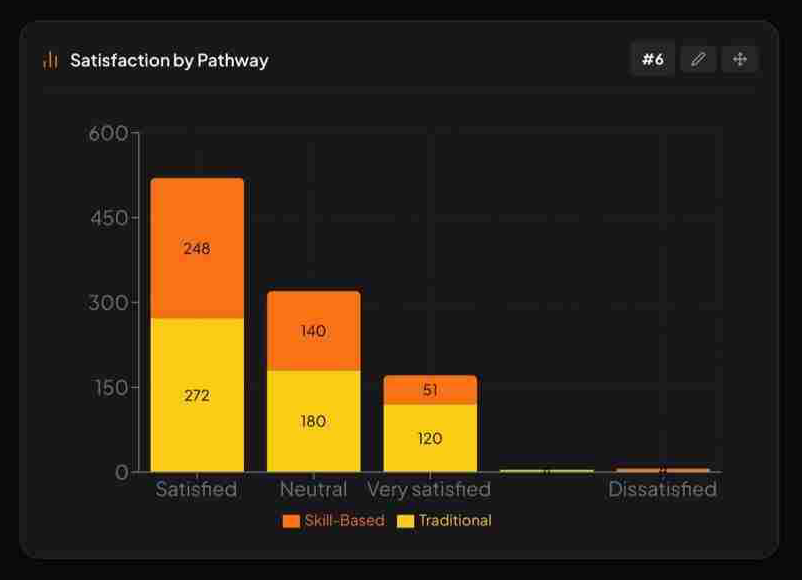
Choosing an educational pathway is only one part of the learning experience. Satisfaction with that choice is another important factor. The students compared satisfaction levels among respondents who selected traditional and skill-based learning.
The dashboard grouped responses into four categories: satisfied, neutral, very satisfied and dissatisfied.
Among traditional education respondents, 272 selected satisfied and 120 selected very satisfied. For skill-based learning, 248 selected satisfied and 51 selected very satisfied. The neutral responses included 180 traditional education respondents and 140 skill-based learning respondents.
These results show that both learning pathways received positive satisfaction responses, while some participants remained neutral about their experiences.
The comparison also highlighted that satisfaction should not be understood through a single measure. Factors such as teaching methods, practical exposure, career opportunities and individual expectations may influence how people evaluate their learning experience.
The analysis helped the team explore satisfaction as an important part of understanding different educational choices.
Assessing Career Clarity and Real-World Preparation
Career clarity and practical preparation were two other important areas examined in the project.
The career clarity dashboard showed 273 clear responses, 173 neutral responses and 99 very clear responses. Another 25 respondents selected unclear, while 8 selected very unclear.
These results offered an overview of how respondents viewed their understanding of career opportunities and future directions.
The team also examined whether participants believed their education prepared them for real-world work.
The dashboard recorded the following responses:
Response | Skill-based | Traditional |
Agree | 232 | 268 |
Neutral | 137 | 206 |
Strongly agree | 67 | 57 |
Disagree | 7 | 41 |
Strongly disagree | Not shown | 6 |
Agreement was the most common response in both learning categories.
The findings suggest that many respondents felt their chosen learning pathway provided some level of preparation for real-world work. However, neutral and negative responses also showed that not everyone shared the same experience.
This comparison helped the students understand why career preparation is an important factor when evaluating educational programmes.
Exploring What the Survey Responses Reveal: Skills or Qualifications?
One of the key questions in the project was whether practical skills or academic qualifications matter more to employers.
The dashboard explored this through five response categories: skills, degrees, both equally, depends on the job or industry, and not sure.
The results showed different opinions among traditional and skill-based learning respondents.
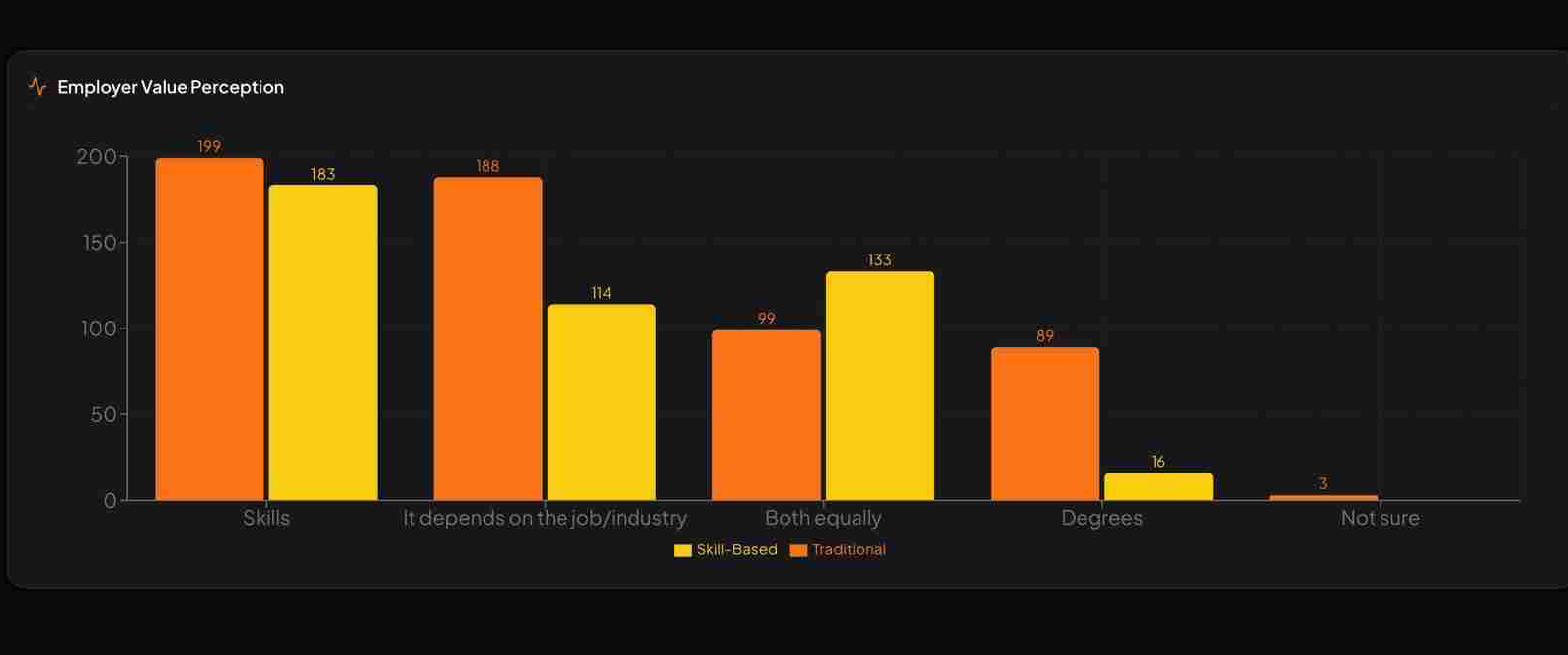
For skill-based learning respondents, 199 selected skills, 188 said it depends on the job or industry, and 99 selected both equally.
Among traditional education respondents, 183 selected skills, 133 selected both equally and 114 said the answer depends on the job or industry.
Only a smaller number selected degrees as the most important factor, with 89 skill-based learning respondents and 16 traditional education respondents choosing this option.
These findings highlight an important perspective from the survey: many respondents considered practical skills valuable when thinking about employment.
At the same time, the responses showed that the importance of skills and qualifications may depend on the requirements of a particular job or industry.
The results do not establish what employers universally prefer. Instead, they represent how the surveyed participants perceive employer expectations.
Turning Survey Responses Into Meaningful Findings
One of the main outcomes of the project was a broader understanding of how people approach education and skill development.
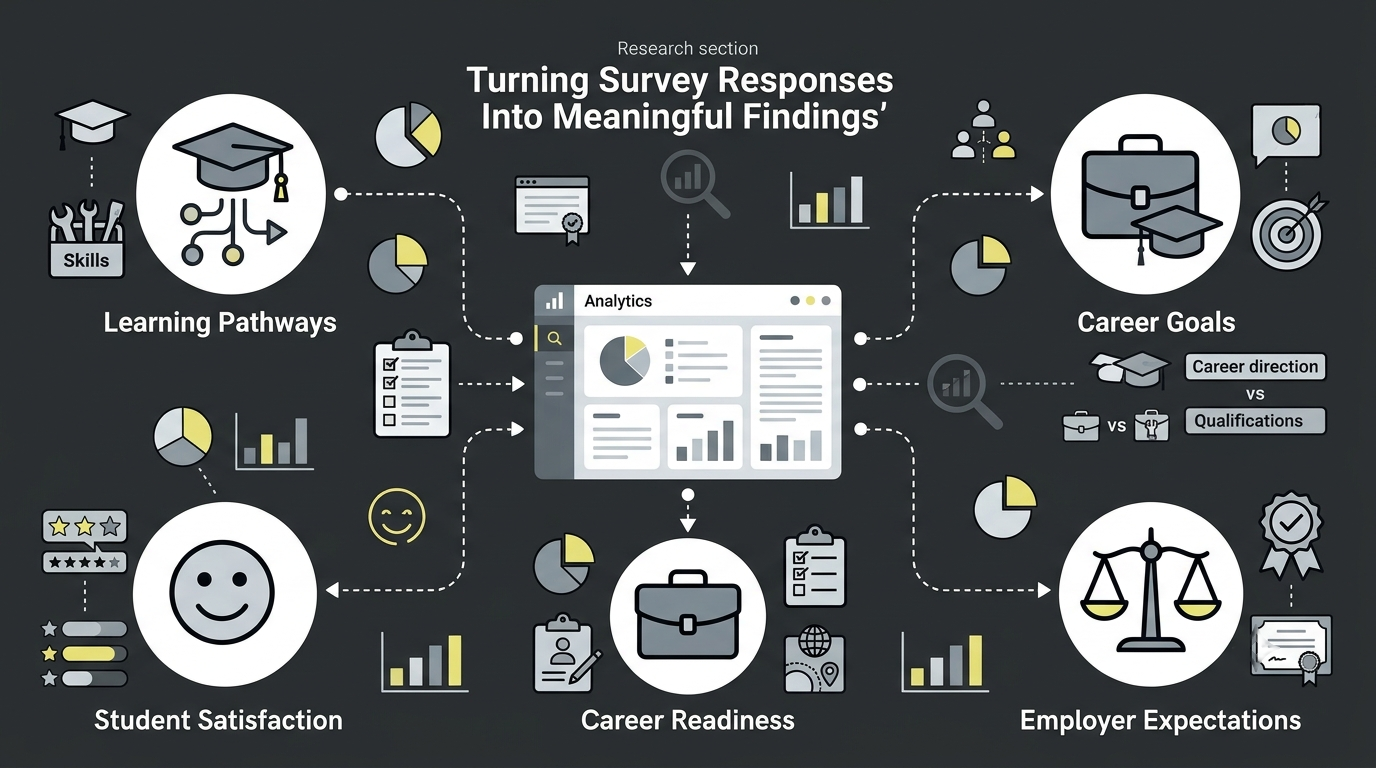
The dashboard showed that traditional education had a higher recorded respondent count than skill-based learning. At the same time, some respondents reported experience with both pathways.
Getting a job emerged as a major learning goal, while higher studies and other career interests also influenced educational choices.
The satisfaction analysis showed positive responses across both pathways. The career clarity and real-world preparation charts provided further insights into how respondents evaluated their learning experiences.
Another important finding concerned the value of practical skills and academic qualifications. Many participants considered skills important, while others believed that the answer depended on the job or industry.
Together, these findings showed that educational choices involve several factors. People consider their career goals, learning experiences, satisfaction and expectations when deciding how to develop their knowledge and abilities.
The project also demonstrated why traditional and non-traditional education should be examined from different perspectives rather than compared using a single measure.
What the Project Demonstrates
The Traditional vs Non-Traditional Education project demonstrates how survey analytics can help students explore a real-world question through collected data.
The DA15 students worked on a project that involved understanding the research problem, preparing a questionnaire, organising responses and presenting findings through dashboard visualisations.
They explored different aspects of education, including learning preferences, respondent backgrounds, career goals, satisfaction and employer value perception.
The project also gave the students an opportunity to compare two learning pathways using different analytical categories.
More importantly, it encouraged them to look beyond response counts and understand what the findings could indicate about people's learning experiences.
The results showed that traditional education and skill-based learning both have a place in how people approach education and career development. The preferences and experiences shared by respondents also highlighted the importance of individual goals and industry requirements.
The findings should be understood within the limits of the survey sample. They represent the responses collected for this project and should not be treated as conclusions about every student, employee or employer.
A Student Project Connecting Education With Data Analytics
Through this project, HACA Tech School students explored how survey data can be used to understand people's educational choices and experiences.
From preparing the questionnaire and organising responses to comparing learning pathways and presenting findings through visualisations, the project brought together research and analytical thinking.
The analysis explored why people choose traditional or skill-based learning, how satisfied they are with their choices and whether they believe their learning prepares them for real-world opportunities.
It also highlighted the importance of practical skills, academic qualifications and career-specific requirements when discussing employment readiness.
Projects like this show how data analytics can turn collected information into meaningful insights. From organising survey responses to analysing patterns and building dashboards, these skills help learners understand and solve real-world problems.
For students interested in building these skills, HACA Tech School offers an Advanced Data Analytics Course in Kerala that builds practical knowledge of data analysis, visualisation, and reporting through hands-on projects.
Explore the course to learn how data analytics can support your academic and career goals.