What Is a Retention Marketing Strategy?
A retention marketing strategy is a long-term approach to keeping existing customers engaged, satisfied, and motivated to continue buying from your business. Rather than focusing solely on acquiring new customers, retention marketing aims to maximize the value of every customer relationship.
A successful retention strategy includes multiple touchpoints after a purchase, such as:
Personalised email campaigns
Product education
Customer onboarding
Loyalty programs
Exclusive offers
Feedback collection
Customer support
Re-engagement campaigns
Instead of treating a purchase as the end of the sales process, retention marketing treats it as the start of an ongoing conversation.
Quick Answer
A retention marketing strategy is a structured plan that uses personalized communication, customer engagement, and lifecycle marketing to encourage repeat purchases, reduce churn, and increase customer lifetime value.
Why Customer Retention Matters More Than Ever
Acquiring customers has become increasingly competitive across almost every industry. Rising advertising costs, changing privacy regulations, and crowded marketplaces mean businesses can no longer depend solely on paid acquisition.
That's why customer retention has become one of the strongest growth drivers.
While retention focuses on keeping existing customers engaged, businesses also need to understand how acquisition strategies work alongside it. Understanding inbound vs outbound marketing can help businesses balance customer acquisition with long-term retention.
When customers continue buying from the same brand, businesses benefit from:
Higher Customer Lifetime Value (CLV)
Returning customers usually spend more over time because they've already developed trust in your business.
Lower Marketing Costs
Retaining existing customers is generally more cost-effective than constantly acquiring new ones. Existing customers already know your products, making future marketing efforts more efficient.
Stronger Brand Loyalty
Satisfied customers often become brand advocates. They leave reviews, recommend your business, and share their experiences with others.
Better Customer Insights
As customers interact with your brand repeatedly, you gain valuable behavioral data that helps improve personalization and future marketing campaigns.
In short, retention creates sustainable growth instead of temporary spikes in sales.

What Is a Customer Retention Marketing Sequence?
A customer retention marketing sequence is a series of planned communications sent after someone becomes a customer.
Rather than sending random promotional emails whenever there's a sale, every message serves a specific purpose within the customer lifecycle.
Think of it as guiding customers through different stages of their relationship with your business.
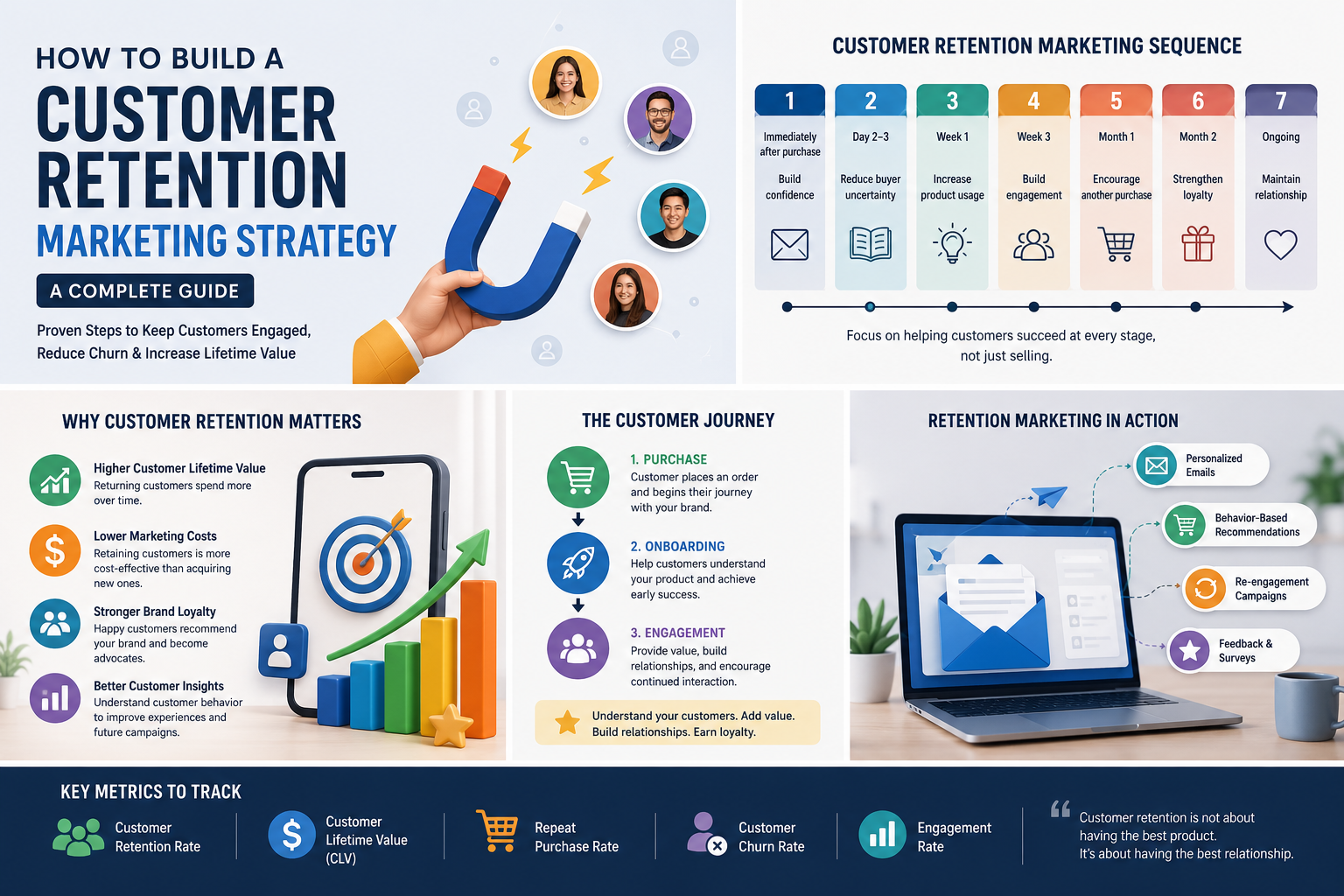
A typical sequence might look like this:
Customer Stage | Marketing Goal | Example Communication |
Immediately after purchase | Build confidence | Thank-you email with order details |
Day 2–3 | Reduce buyer uncertainty | Product setup guide |
Week 1 | Increase product usage | Tips and best practices |
Week 3 | Build engagement | Customer success stories |
Month 1 | Encourage another purchase | Personalized recommendations |
Month 2 | Strengthen loyalty | Exclusive rewards or VIP offers |
Ongoing | Maintain relationship | Educational newsletters and updates |
Notice that only a few of these messages focus on selling.Most focus on helping customers succeed.
That's exactly what makes retention marketing effective.
Understanding the Customer Journey Before Building Your Sequence
One of the biggest mistakes businesses make is creating marketing campaigns without understanding where customers are in their journey.
Every customer experiences different emotions after making a purchase.
Someone who bought your product yesterday needs reassurance.
Someone who has been using it for three months may be ready for an upgrade.
Someone who hasn't interacted with your brand in six months may need a completely different message.
A successful retention marketing strategy adapts communication based on these changing needs.
Here's a simplified customer journey:
Stage 1: Purchase
The customer has completed their first order.
Goal:
Build trust immediately.
Recommended actions:
Send an order confirmation.
Share delivery expectations.
Thank them for choosing your brand.
Explain what happens next.
Stage 2: Onboarding
This stage is especially important for SaaS businesses, subscription services, and products that require setup.
Customers who understand how to use your product are far more likely to stay.
Helpful onboarding content includes:
Video tutorials
Quick-start guides
FAQs
Product walkthroughs
Setup checklists
Instead of overwhelming customers with information, deliver helpful content gradually over several days.
Stage 3: Engagement
Once customers become comfortable, your goal shifts from education to engagement.
This is where personalized communication becomes valuable.
Examples include:
Recommended products based on previous purchases
Usage tips
Customer success stories
Invitations to webinars or exclusive communities
Educational blog content
Rather than constantly promoting discounts, provide value that helps customers achieve better results.
Customers stay loyal to brands that continue helping them after the purchase.
Step-by-Step Guide to Building a Customer Retention Marketing Sequence
A high-performing retention sequence doesn't happen by accident. It follows a structured process that matches customer needs at every stage of the journey.

Step 1: Segment Your Customers Instead of Sending the Same Message to Everyone
The foundation of every successful retention marketing strategy is customer segmentation.
Not every customer has the same interests, buying habits, or level of engagement. Sending identical emails or offers to your entire customer base often leads to lower open rates, fewer conversions, and higher unsubscribe rates.
Start by grouping customers based on factors such as:
First-time vs. repeat buyers
Purchase history
Average order value
Product category
Customer location
Engagement level
Subscription status
Time since last purchase
The more relevant your messaging is, the more likely customers are to engage with your brand.
Step 2: Create a Strong Post-Purchase Experience
The period immediately after a purchase is one of the most important moments in the customer relationship.
Many brands focus heavily on convincing people to buy but disappear once the transaction is complete. This creates a gap where customers may feel uncertain about their decision.
A good retention marketing sequence starts by making customers feel confident about their purchase.
Your post-purchase communication should answer questions like:
Did my order go through successfully?
When will I receive my product?
How do I get the best results from it?
Where can I get help if I need it?
A simple post-purchase flow can include:
Purchase Confirmation
This message should do more than confirm payment. It should reassure customers that they made the right choice.
Include:
Order details
Delivery information
Customer support contact
A warm thank-you message
Product Education
Help customers understand how to use your product effectively.
For example:
An online fitness brand can send workout guides after someone purchases a membership.
A skincare brand can share a routine based on the products purchased.
A software company can send setup tutorials and feature guides.
The goal is simple: help customers experience value quickly.
When customers see results faster, they are more likely to continue the relationship.
Step 3: Use Personalization to Make Customers Feel Recognized
Personalization is no longer just adding a customer's name to an email. Customers now expect brands to understand their preferences and provide relevant recommendations.
A personalized retention marketing strategy uses customer data to create meaningful interactions.
Examples include:
Product Recommendations
Instead of sending the same offer to everyone, recommend products based on:
Previous purchases
Browsing behavior
Customer interests
Frequently purchased combinations
For example, a customer who purchased a camera may receive recommendations for lenses, accessories, or photography courses.
Personalized Content
Not every customer needs the same information. A beginner user may need basic guides, while an experienced customer may prefer advanced tips.
Creating different content paths improves engagement and makes customers feel understood.
Personalized Offers
Discounts should not be the only retention tool, but when used strategically, they can bring back inactive customers.
Examples:
Birthday rewards
Loyalty discounts
Anniversary offers
Exclusive early access
The focus should be on making customers feel valued, not training them to wait for discounts.
Step 4: Build Engagement Through Multiple Channels
A modern customer retention sequence should not depend on one communication channel. Customers interact with brands across different platforms, and each channel plays a different role.
This becomes particularly important for ecommerce businesses, where email, WhatsApp, social media, paid advertising, and other channels work together throughout the customer journey. Learn more about digital marketing in e-commerce and how these channels can support customer engagement and retention.
Some effective retention channels include:
Email Marketing
Email remains one of the strongest retention channels because it allows direct communication with customers.
Common retention emails include:
Welcome emails
Educational newsletters
Product recommendations
Customer success stories
Re-engagement campaigns
WhatsApp Marketing
For businesses targeting customers in regions where WhatsApp is widely used, it can be a powerful retention channel.
Brands can use WhatsApp for:
Order updates
Personalized recommendations
Customer support
Limited-time offers
However, messages should always provide value. Excessive promotional messages can quickly damage customer trust.
Push Notifications
For mobile applications and ecommerce platforms, push notifications help maintain regular engagement.
Examples:
New feature announcements
Reminder notifications
Personalized recommendations
Limited availability alerts
The key is choosing the right channel for the right customer moment.
Step 5: Create Re-Engagement Campaigns for Inactive Customers
Not every customer will continue interacting with your brand regularly. Some customers may forget about your business. Others may lose interest or switch to competitors.
This is where re-engagement campaigns become important.
A re-engagement sequence helps bring inactive customers back into the conversation. A typical flow might include:
First Message: Friendly Reminder
Avoid immediately offering discounts. Instead, remind customers about the value your brand provides.
Example:
"Here are some tips to get more from your previous purchase."
Second Message: Provide Additional Value
Share something useful:
New product updates
Helpful resources
Customer stories
Exclusive content
Third Message: Offer an Incentive
If customers still don't respond, a carefully planned incentive can encourage action.
Examples:
Limited-time discount
Free upgrade
Loyalty reward
The goal is not to chase customers aggressively. It is to remind them why they trusted your brand in the first place.
Step 6: Collect Customer Feedback and Act on It
Customer feedback is one of the most valuable sources of information for improving retention.
When customers share their opinions, they are giving you insights into:
What they like about your product
Problems they face
Features they want
Reasons they may leave
A simple feedback sequence can include:
After Purchase Review Request
Ask customers about their experience after they have had enough time to use the product.
Customer Satisfaction Survey
Use surveys to measure satisfaction levels.
Common questions include:
How satisfied are you with your purchase?
What could we improve?
Would you recommend us to others?
Follow Up on Feedback
This is where many businesses fail. Collecting feedback without taking action can frustrate customers.
When customers see that their suggestions influence improvements, they develop stronger trust in the brand.
Step 7: Measure and Improve Your Retention Marketing Strategy
A retention sequence is not something you create once and forget. Customer behaviour changes, market trends shift, and campaigns need continuous improvement.
Track important retention metrics such as:
Customer Retention Rate
This shows the percentage of customers who continue doing business with you over a specific period. A higher retention rate usually indicates stronger customer satisfaction and loyalty.
Customer Lifetime Value (CLV)
CLV measures the total revenue a customer is expected to generate during their relationship with your brand. Increasing CLV means customers are staying longer and contributing more value.
Repeat Purchase Rate
This tells you how many customers return after their first purchase. It helps identify whether your retention campaigns are encouraging repeat business.
Customer Churn Rate
Churn measures how many customers stop purchasing or cancel their subscriptions. A rising churn rate is usually a sign that something in the customer experience needs improvement.
Email and Campaign Engagement
Track:
Open rates
Click-through rates
Conversion rates
Unsubscribe rates
These insights help you understand what messages resonate with customers
Common Mistakes That Hurt Customer Retention
Even businesses with good products struggle with retention because of simple mistakes.
Sending Too Many Promotional Messages
Customers don't want every interaction to be a sales pitch. Balance promotional content with educational and helpful communication.
Ignoring Existing Customers
Many businesses continuously chase new customers while neglecting existing ones. Remember, loyal customers are often your most valuable audience.
Lack of Personalisation
Generic messages make customers feel like just another number. Use customer data to create more relevant experiences.
Not Providing Value After Purchase
The relationship should not end after payment. Continue helping customers achieve success with your product or service.
Final Thoughts
Building a successful customer retention marketing sequence is not about sending more messages. It is about sending the right message at the right moment.
Customers stay with brands that continue providing value after the purchase. They remember businesses that educate them, support them, and make them feel appreciated.
A strong retention marketing strategy combines customer insights, personalization, automation, and meaningful communication to turn one-time buyers into loyal customers.
The businesses that win in the long run are not always the ones that attract the most customers. They are the ones that build relationships strong enough to make customers stay.
Retention is only one part of a broader digital marketing strategy. Businesses can also explore channels such as affiliate marketing to attract new audiences and create additional acquisition opportunities alongside their retention efforts.
Start by understanding your customers, create a sequence around their journey, and keep improving based on their behaviour. That is how retention becomes a growth engine instead of just another marketing activity.
If you're looking to build practical skills in customer lifecycle marketing, marketing automation, SEO, performance marketing, and AI-powered digital strategies, enrolling in a Digital Marketing Course in Kerala can be a great next step. Hands-on training and real-world projects will help you understand how to create marketing strategies that deliver measurable business results and prepare you for today's competitive digital landscape.
“Remember, acquiring a customer gets your business noticed and retaining them is what helps it grow.”