Quick Answer
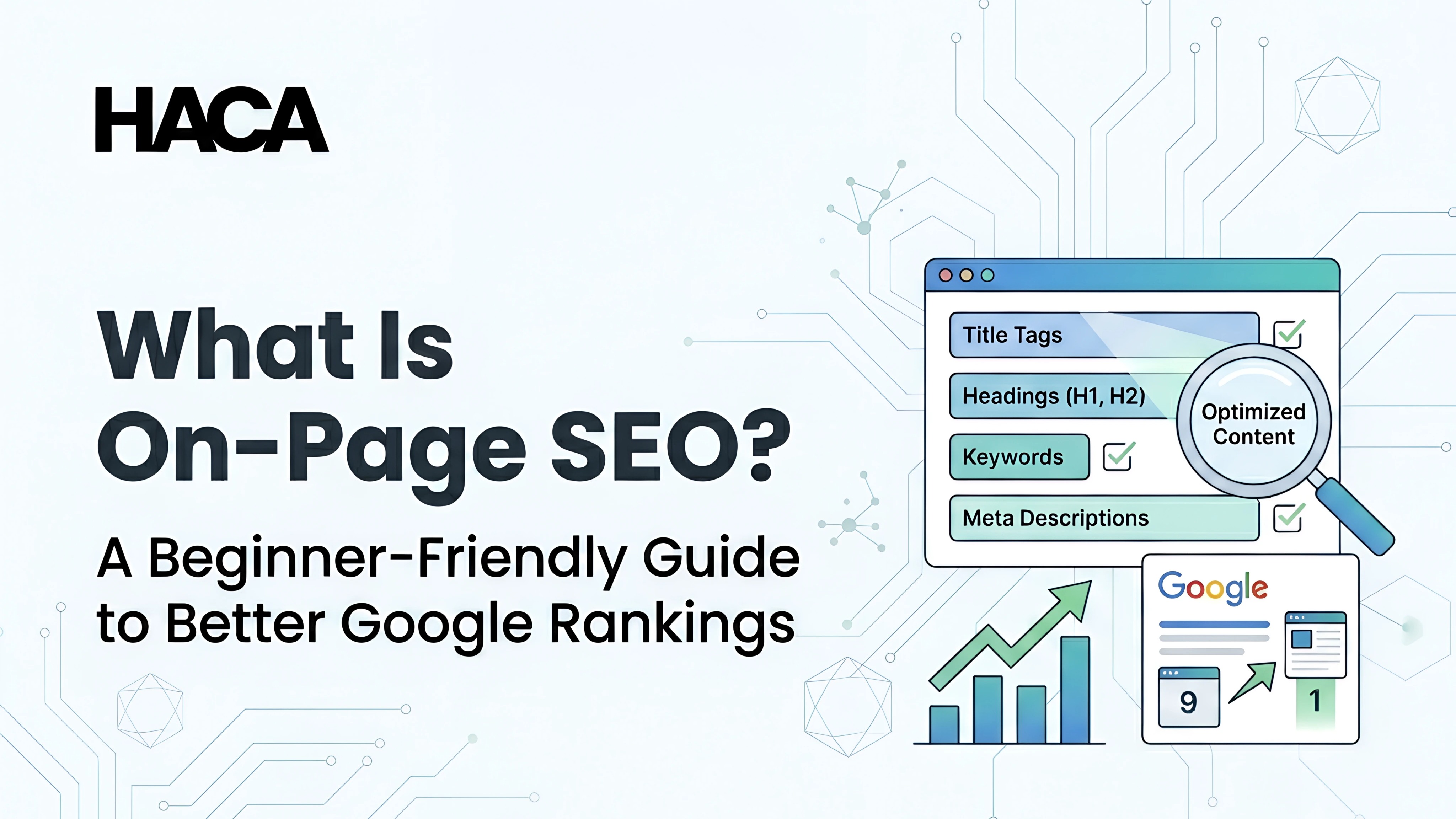
On-Page SEO is the practice of optimising the content and elements on a webpage to help it rank higher in search results and provide a better experience for visitors.
It includes optimising:
Page titles
Headings
Content
Images
URLs
Internal links
Mobile experience
Page speed
Unlike Off-Page SEO, which focuses on backlinks, On-Page SEO deals with everything you can control directly on your website.
Why Should You Care About On-Page SEO?
Have you ever published a blog or created a website page and wondered why nobody is finding it on Google?
You're not alone.
Many people spend hours creating content, only to see little or no traffic. In many cases, the problem isn't the content itself. It's that the page hasn't been properly optimised.
That's where On-Page SEO comes in. On-Page SEO is simply the process of improving different parts of a webpage so that search engines can understand it better and users can have a better experience.
Think of it like organizing a shop. If products are arranged neatly, signs are clear, and customers can easily find what they need, they're more likely to stay and make a purchase. Websites work in a similar way.
When your page is easy to understand, loads quickly, answers the visitor's question, and follows SEO best practices, Google is more likely to show it to people searching for that topic.
In this guide, you'll learn what On-Page SEO is, why it's important, the factors that affect rankings, common mistakes to avoid, and a simple checklist you can use on every page you publish.

What Does On-Page SEO Include?
On-Page SEO covers many parts of a webpage, including:
Content quality
Page titles
Meta descriptions
Headings
URLs
Internal links
Images
Mobile friendliness
Page speed
All of these elements work together to improve visibility and user experience.
Why Is On-Page SEO Important?
Improves Search Rankings
Properly optimized pages have a better chance of ranking for target keywords because search engines can easily understand their relevance.
Enhances User Experience
Good SEO and good user experience go hand in hand. Clear navigation, readable content, fast loading pages, and mobile responsiveness improve visitor satisfaction.
Helps Search Engines Understand Content
Structured headings, semantic keywords, schema markup, and internal links help search engines interpret the context of your content more accurately.
Increases Organic Traffic
Higher rankings typically result in more clicks and visitors. Effective on-page SEO helps attract users who are actively searching for your products, services, or information.
On-Page SEO vs Off-Page SEO
One of the most common beginner questions is:
What's the Difference Between On-Page SEO and Off-Page SEO?
The easiest way to understand it is this:
On-Page SEOEverything you optimize on your own website. Examples include:
| Off-Page SEOActivities that happen outside your website. Examples include:
|
Think of On-Page SEO as improving your house and Off-Page SEO as building your reputation in the neighbourhood. Both are important, but On-Page SEO should always come first.
On-Page SEO vs Technical SEO
Another area that confuses beginners is Technical SEO.
On-Page SEO
Focuses on content and visible page elements.
Technical SEO
Focuses on how a website works behind the scenes.
Examples include:
Website crawling
Indexing
Site architecture
XML sitemaps
HTTPS security
If Technical SEO helps search engines access your website, On-Page SEO helps them understand it.
Want to know more about technical side? Then read our Technical SEO Guide
Key Elements of On-Page SEO
Let's look at the most important elements you should optimize on every page.
1. Title Tags
What Is a Title Tag?
A title tag is the headline that appears in search results. It's often the first thing users see before deciding whether to click.
Why It Matters
A good title tag helps:
Improve click-through rates
Explain the topic clearly
Signal relevance to search engines
Best Practices
Include your primary keyword naturally
Keep titles clear and descriptive
Make each title unique
Stay around 50–60 characters
Example
On-Page SEO: Complete Guide for Beginners (This example clearly explains what the page offers.)
SEO Tips You Need to Know Right Now (This confuses the readers.)
2. Meta Descriptions
What Is a Meta Description?
A meta description is the short summary shown below the page title in search results.
Do Meta Descriptions Affect Rankings?
Meta descriptions don’t directly affect ranking. However, they can increase clicks by encouraging people to visit your page.
Best Practices
Keep descriptions under 160 characters
Explain the value of the page
Include your keyword naturally
Example
Learn what On-Page SEO is, why it matters, and how to optimise your pages for better rankings and traffic.
3. Header Tags (H1-H6)
Headers help organise your content into sections. Think of them as chapter titles in a book.
Benefits of Header Tags
Improve readability
Help search engines understand structure
Make scanning easier
Best Practices
Use one H1 tag
Use H2 tags for main sections
Use H3 tags for supporting topics
Organise content logically.
Include keywords naturally in headings.
A well-structured article is easier to understand for both users and search engines.
4. URL Optimisation
Your URL should clearly describe what the page is about. SEO-friendly URLs improve usability and search engine understanding.
Good URL Example
yourwebsite.com/on-page-seo-guide
Poor URL Example
yourwebsite.com/post?id=8723
Best Practices
Keep URLs short
Include keywords naturally
Avoid unnecessary numbers and symbols
5. Content Optimisation
Content remains the foundation of On-Page SEO.
Focus on Search Intent
Search intent refers to the reason behind a user's search.
For example:
Someone searching "What is On-Page SEO?" wants an explanation.
Someone searching "SEO agency near me" is looking for a service provider.
Understanding intent helps you create content that matches user expectations.
Create Comprehensive Content
Don't just answer a question briefly; cover the topic completely.
Explain concepts.
Add examples.
Address common concerns.
Answer related questions.
The more helpful your content is, the more valuable it becomes.
Use Natural Language
Modern search engines understand context much better than before. Instead of forcing keywords repeatedly, write naturally and focus on helping readers.
Use Semantic Keywords
For example, while writing about SEO, you should try to include related terms such as:
On-page optimization
SEO content optimization
Internal linking SEO
Image optimization SEO
Core Web Vitals
E-E-A-T SEO
This helps search engines understand context. Going beyond individual keywords, entity-based SEO helps search engines understand the people, places, concepts, brands, and relationships connected to a topic.
6. Keyword Placement
Is Keyword Density Still Important?
Not really. Years ago, people believed repeating keywords frequently would improve rankings.
Today, search engines are much smarter. What matters is relevance and clarity.
Where Should You Place Keywords?
Include your primary keyword in:
Title tag
H1 heading
Introduction
Subheadings
Content naturally
Conclusion
Meta description
Use keywords where they make sense. Avoid keyword stuffing.
7. Internal Linking
Internal links connect pages within your website.
For example:
A page about On-Page SEO can link to:
Keyword Research Guide
Technical SEO Guide
SEO Audit Guide
Content Marketing Guide
Local SEO Guide
Link Building Guide
Why Internal Linking Matters
It helps:
Users discover more content
Search engines crawl pages
Build topic relevance
Internal linking is one of the simplest and most effective SEO techniques.
8. Image Optimisation
Images improve engagement but should also be optimised.
Use Descriptive File Names
Instead of:
image1.jpg
Use:
on-page-seo-checklist.jpg
Add Alt Text
Alt text describes images for accessibility and search engines.
Compress Images
Large image files slow down websites. Use compressed images to improve loading speed.
Best On-Page SEO Tools
Several tools can help improve optimization:
Google Search Console
Screaming Frog SEO Spider
Ahrefs
Semrush
Yoast SEO
Google PageSpeed Insights
These tools help identify technical issues, content gaps, and optimization opportunities.
Worth Reading: The 10 Best SEO AI Tools for 2026: Pros, Cons, Pricing, and Reviews
Advanced On-Page SEO Techniques
Basic optimisation helps you build a strong foundation. Advanced techniques can help you gain an additional advantage.
E-E-A-T Signals
E-E-A-T stands for:
Experience
Expertise
Authoritativeness
Trustworthiness
Search engines want to recommend content from reliable sources.
How Small Businesses Can Improve E-E-A-T
Add author profiles
Share real experiences
Publish case studies
Showcase reviews
Display contact details
Keep content updated
These signals help build trust with both users and search engines.
E-E-A-T becomes particularly important when creating content for YMYL SEO topics, where the accuracy, credibility, and trustworthiness of information can have a significant impact on users.
Schema Markup SEO
Schema markup provides additional information about your content. It helps search engines understand pages more accurately.
Common schema types include:
FAQ Schema
Article Schema
Review Schema
Local Business Schema
Schema can also improve how your pages appear in search results.
Featured Snippet Optimisation
Featured snippets often appear above regular search results.
To improve your chances:
Answer questions directly
Use bullet points
Use numbered lists
Include concise definitions
AEO and featured snippet optimisation work very well together.
Core Web Vitals
Core Web Vitals measure how users experience a webpage.
They focus on:
Loading speed
Responsiveness
Visual stability
Fast, stable pages generally provide a better experience.
Mobile Friendliness
Most internet users browse on mobile devices.
Your website should:
Load quickly
Display properly on smaller screens
Be easy to navigate
Have readable text
Mobile optimization is no longer optional.
Also Read: What Are Core Web Vitals? A Guide to Google’s User Experience Metrics
Content Freshness SEO
Content can become outdated over time. Updating older pages can improve rankings and keep information accurate.
Consider updating:
Statistics
Screenshots
Examples
Tools
Industry trends
Fresh content sends positive signals to search engines.

How AI Has Changed On-Page SEO in 2026
AI-powered search experiences have transformed how content is evaluated.
Modern SEO focuses less on exact-match keywords and more on:
Search intent satisfaction
Topical authority
Helpful content
User engagement
E-E-A-T signals
Pages that genuinely answer user questions outperform content created solely for search engines.
Search Intent Optimisation Framework
A simple framework for content creation:
Step 1: Identify User Intent
Determine whether the search is:
Informational
Navigational
Commercial
Transactional
Step 2: Analyse Top-Ranking Pages
Study what Google currently rewards.
Step 3: Create Better Content
Add depth, examples, visuals, and updated information.
Step 4: Optimise User Experience
Improve readability, navigation, and page speed.
Step 5: Update Regularly
SEO is an ongoing process, not a one-time task.
Real-World On-Page SEO Example
Imagine a local bakery in Kochi creating a page targeting:
"Best Birthday Cakes in Kochi"
An optimized page would include:
Keyword in title tag
Keyword in H1
Detailed product descriptions
Customer reviews
Optimized images
Local business schema
Internal links to related products
Mobile-friendly design
This creates a strong relevance signal for both users and search engines.
On-Page SEO Checklist
Before publishing any page, verify:
Keyword in the title tag
Keyword in H1
Optimised meta description
SEO-friendly URL
Search intent satisfied
Proper heading structure
Internal links added
Images optimized
Alt text included
Mobile friendly
Fast-loading page
Schema markup implemented
Content is updated and accurate
E-E-A-T signals present
Clear call-to-action
Common On-Page SEO Mistakes
Keyword Stuffing
Using keywords excessively makes content difficult to read and can harm rankings.
Duplicate Content
Avoid publishing identical content across multiple pages.
Missing Meta Tags
Every important page should have a unique title and meta description.
Poor Internal Linking
Unlinked content is harder for search engines to discover.
Ignoring Search Intent
Ranking becomes difficult when content doesn't match what users want.
Thin Content
Short, low-value content rarely performs well in competitive search results.
Slow Page Speed
Users leave slow websites quickly, which negatively impacts performance.
Conclusion
On-Page SEO is one of the most important foundations of SEO because it focuses on the elements you can directly control on your website. From optimising title tags and meta descriptions to improving content quality, internal linking, image optimisation, and user experience, every small improvement helps search engines understand your content better and helps visitors find the information they need more easily.
As we've seen throughout this guide, modern On-Page SEO is no longer about stuffing keywords into a page. In 2026, success comes from understanding search intent, creating genuinely helpful content, building trust through E-E-A-T signals, and delivering a seamless experience across all devices. Whether you're a blogger, business owner, content writer, or aspiring marketer, mastering these fundamentals can significantly improve your website's visibility and organic traffic.
If you're serious about building a career in SEO or digital marketing, learning On-Page SEO is just the beginning. To gain practical experience in SEO, content marketing, Google Ads, social media marketing, AI-powered marketing tools, and other in-demand skills, explore our Digital Marketing Course in Kerala. With expert guidance, hands-on projects, and industry-focused training, you'll learn how to apply these strategies in real-world marketing campaigns and stay ahead in the ever-changing digital landscape.