
Choosing between Google Ads and Meta Ads depends on how customers discover your products or services. Google Ads helps businesses reach people actively searching for solutions, while Meta Ads (Facebook and Instagram) introduces products and services to people based on their interests, behaviour and demographics.
Neither platform delivers better results for every business. Google Ads is generally suitable for capturing existing demand, while Meta Ads helps create demand, build brand awareness and reach new audiences. The right choice depends on your marketing goals, target audience, advertising budget and expected return on investment (ROI).
This guide compares Google Ads vs Meta Ads across advertising costs, targeting, campaign formats, lead generation and performance to help you choose the right platform.
Let’s begin with the difference between both.
What Is the Difference Between Google Ads and Meta Ads?
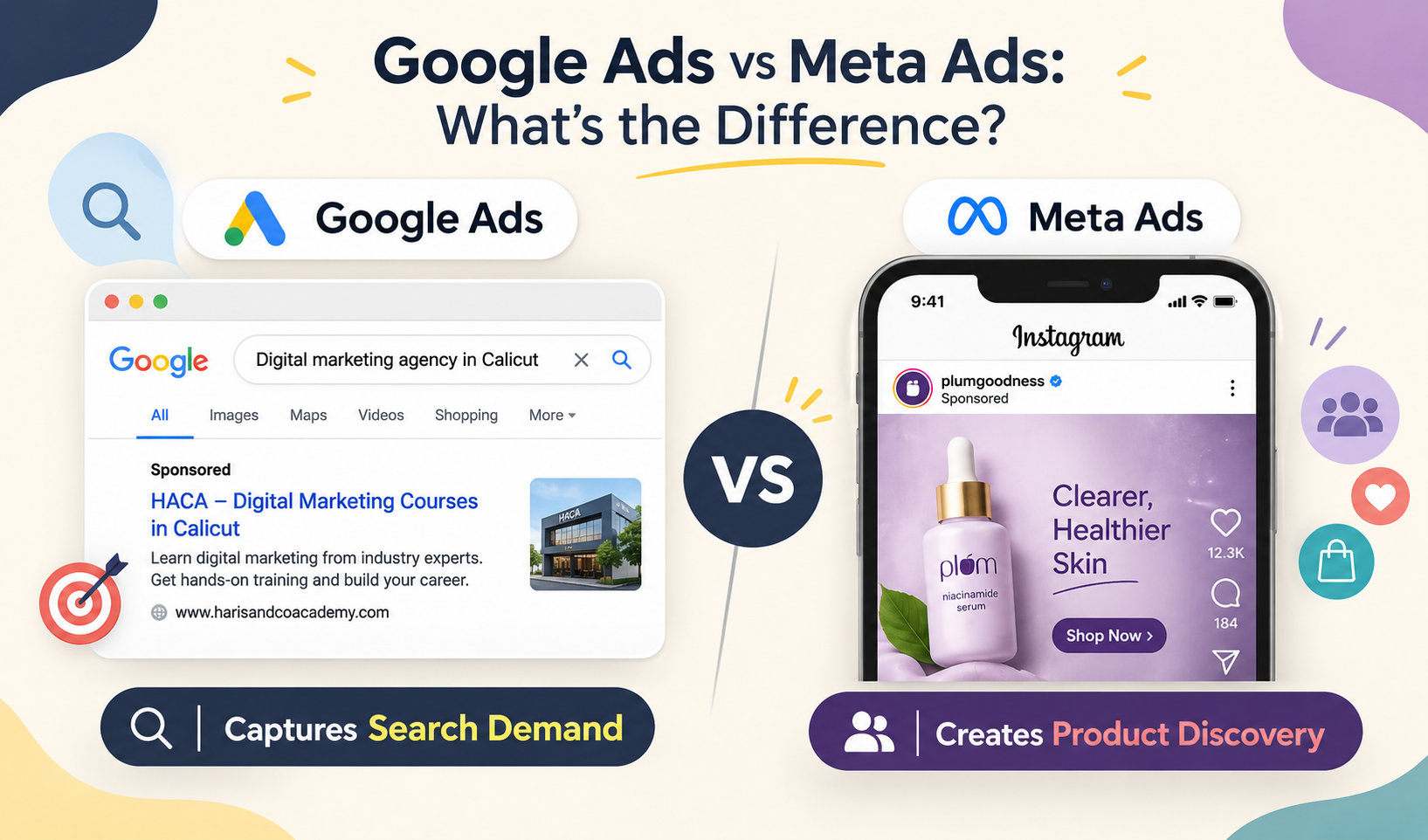
The main difference between Google Ads and Meta Ads is how they reach potential customers. Google Ads primarily targets search intent, while Meta Ads uses audience information to reach people as they browse social media.
Comparison factor | Google Ads | Meta Ads |
Main platforms | Google Search, YouTube, Display Network and more | Facebook, Instagram, Messenger and Audience Network |
Targeting | Keywords, search intent, location and audience signals | Interests, demographics, behaviour and audience signals |
Customer intent | Often higher purchase intent on Search | Often discovery and consideration |
Common formats | Search, Display, Shopping and Video | Image, video, carousel, Stories and Reels |
Main strengths | Capturing existing demand | Creating demand and building awareness |
Common objectives | Leads, sales, website traffic and visibility | Awareness, engagement, leads and sales |
Suitable businesses | Local services, B2B, professional services and ecommerce | Ecommerce, lifestyle, education and consumer brands |
For example, someone searching for a digital marketing agency in Calicut already has a requirement. A Google Search ad can reach that person at the right moment.
On the other hand, someone watching Instagram Reels might discover a new skincare product through a Meta advertisement without actively searching for it.
This difference in customer behaviour influences campaign strategy, advertising costs and conversion potential.
How Do Google Ads and Meta Ads Work?
Both platforms use advertising auctions to decide which advertisements appear, but their targeting methods and placements differ.
How Google Ads Works
Google Ads allows businesses to advertise across Google's advertising network. Its Search campaigns display advertisements when users search for relevant products, services or information.
Businesses can target relevant search terms, locations, languages and audiences. They can also choose bidding strategies based on clicks, impressions, conversions or other campaign objectives.
Common Google Ads campaign types include:
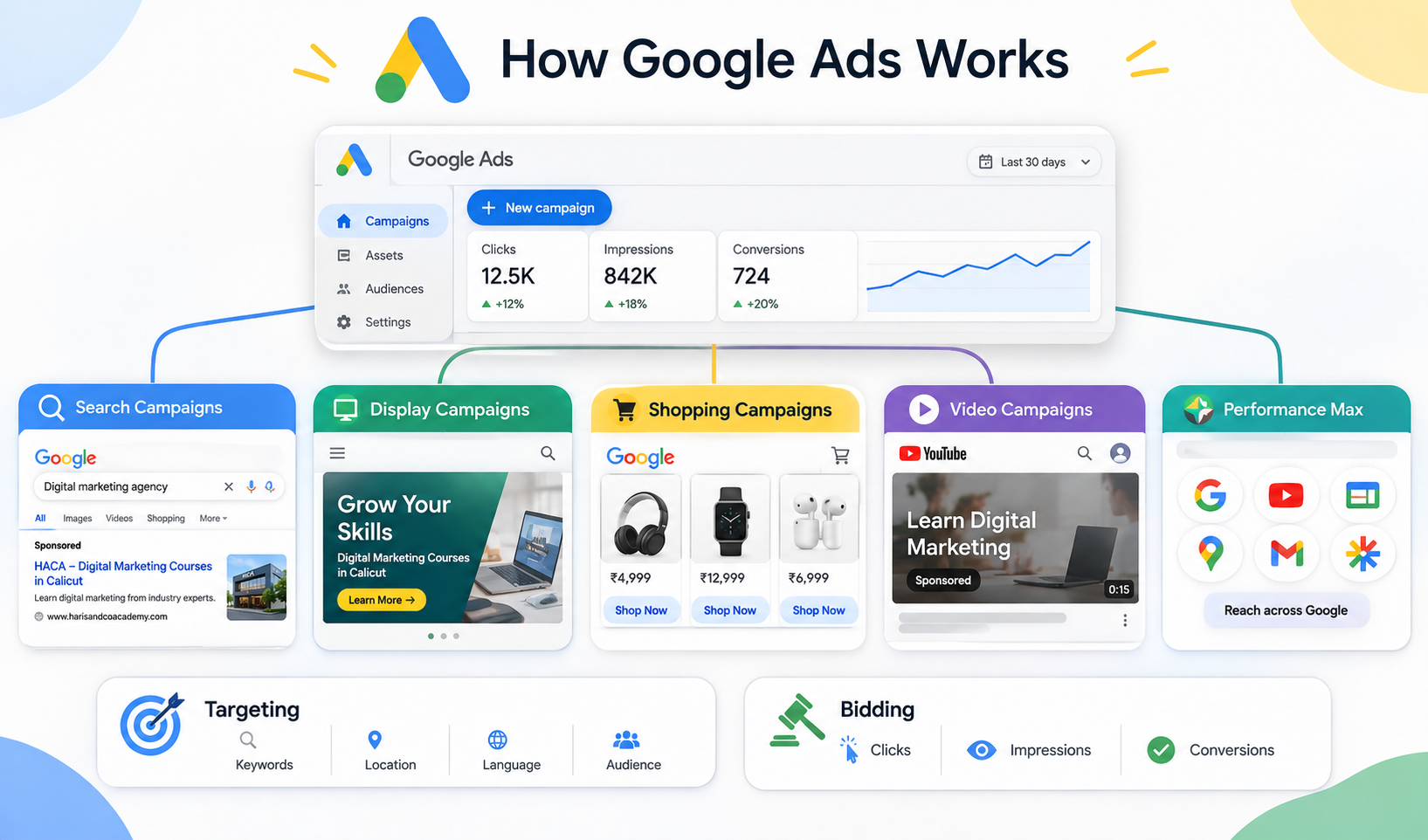
Search campaigns: Display text advertisements on Google search results.
Display campaigns: Show visual advertisements across websites and apps.
Shopping campaigns: Promote products using product images, prices and other information.
Video campaigns: Reach audiences through YouTube advertisements.
Performance Max: Access multiple Google advertising channels through a goal-based campaign.
Google's campaign options allow businesses to reach customers at different stages of their buying journey. If you want to understand how search campaigns work, including keyword targeting, bidding and campaign setup, explore this detailed Google Ads guide.
How Meta Ads works
Meta Ads helps businesses reach audiences across Facebook, Instagram, Messenger and other supported placements.
Advertisers create campaigns based on objectives such as awareness, traffic, engagement, leads and sales. They can use audience characteristics, previous interactions and advertising signals to reach relevant users.
Common Meta Ads formats include:
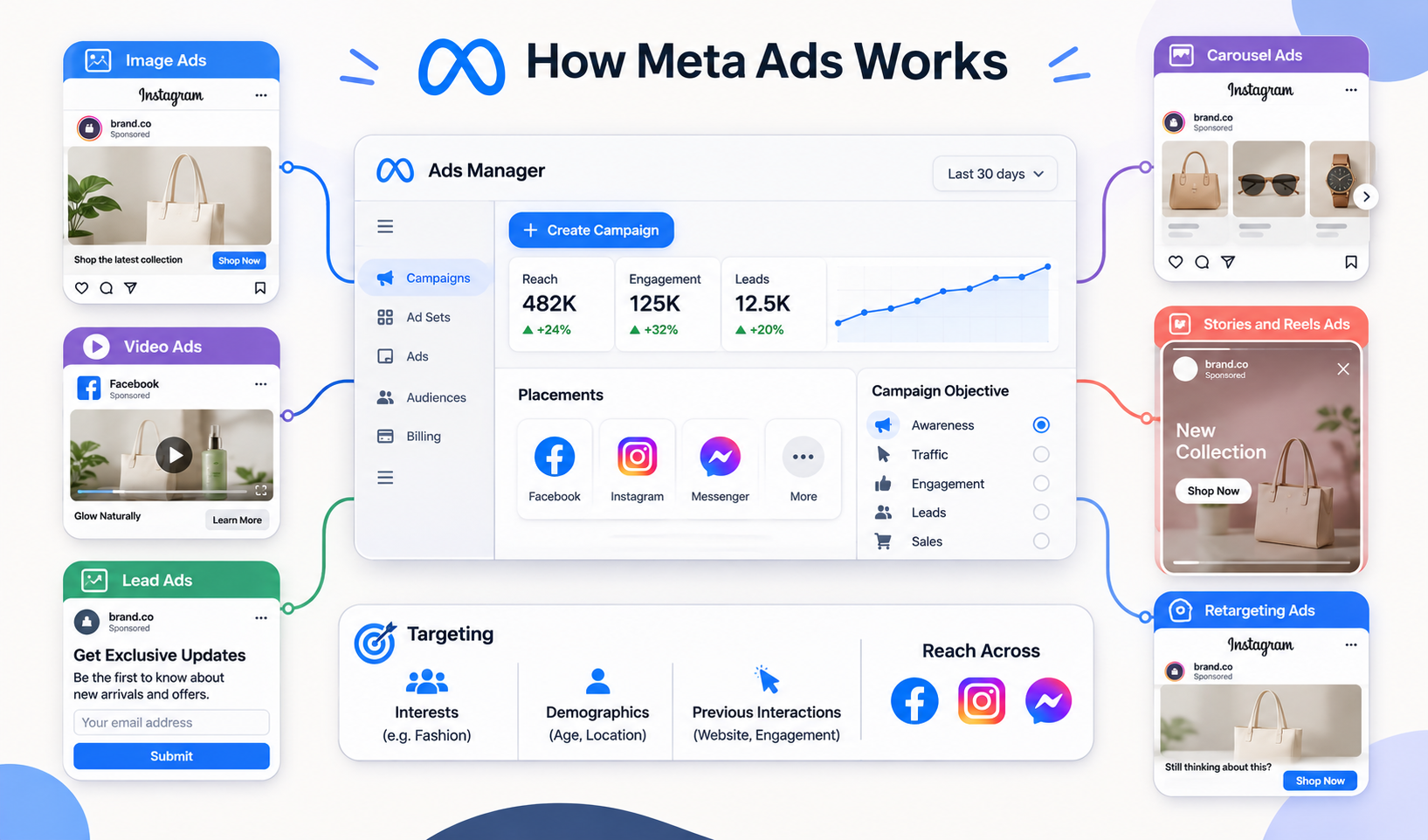
Image ads: Promote products, services and offers through static visuals.
Video ads: Demonstrate products and communicate brand messages.
Carousel ads: Showcase multiple products or features within one advertisement.
Stories and Reels ads: Reach mobile audiences through full-screen vertical content.
Lead ads: Collect customer enquiries through instant forms.
Retargeting ads: Reconnect with people who previously interacted with a business.
For example, an online clothing store can use Instagram Reels to introduce a new collection and retarget people who viewed its products but did not complete a purchase.
Paid campaigns are only one way to use social platforms for business growth. Businesses can also use organic content, audience engagement and community building to strengthen their online presence. Learn more about how social media can help a business grow.
Google Ads vs Meta Ads: Which Is More Cost-Effective?
There is no fixed answer to which platform is cheaper. Google Ads and Meta Ads use different pricing models, and actual costs depend on competition, audience, location, campaign objective and industry.
Google Search campaigns commonly use cost-per-click (CPC) bidding, while Meta campaigns can optimise for impressions, clicks, leads, purchases and other actions.
Here are the main advertising cost metrics businesses should understand:
Metric | Meaning | Why it matters |
CPC | Cost per click | Measures how much each click costs |
CPM | Cost per 1,000 impressions | Measures the cost of reaching an audience |
CPL | Cost per lead | Measures the cost of generating an enquiry |
CPA | Cost per acquisition | Measures the cost of acquiring a customer or completing a defined action |
ROAS | Return on ad spend | Measures revenue generated against advertising expenditure |
Both platforms allow businesses to measure campaign performance and optimise their advertising spend based on results. Understanding the benefits of performance marketing can also help businesses see how data-driven campaigns support their marketing goals.
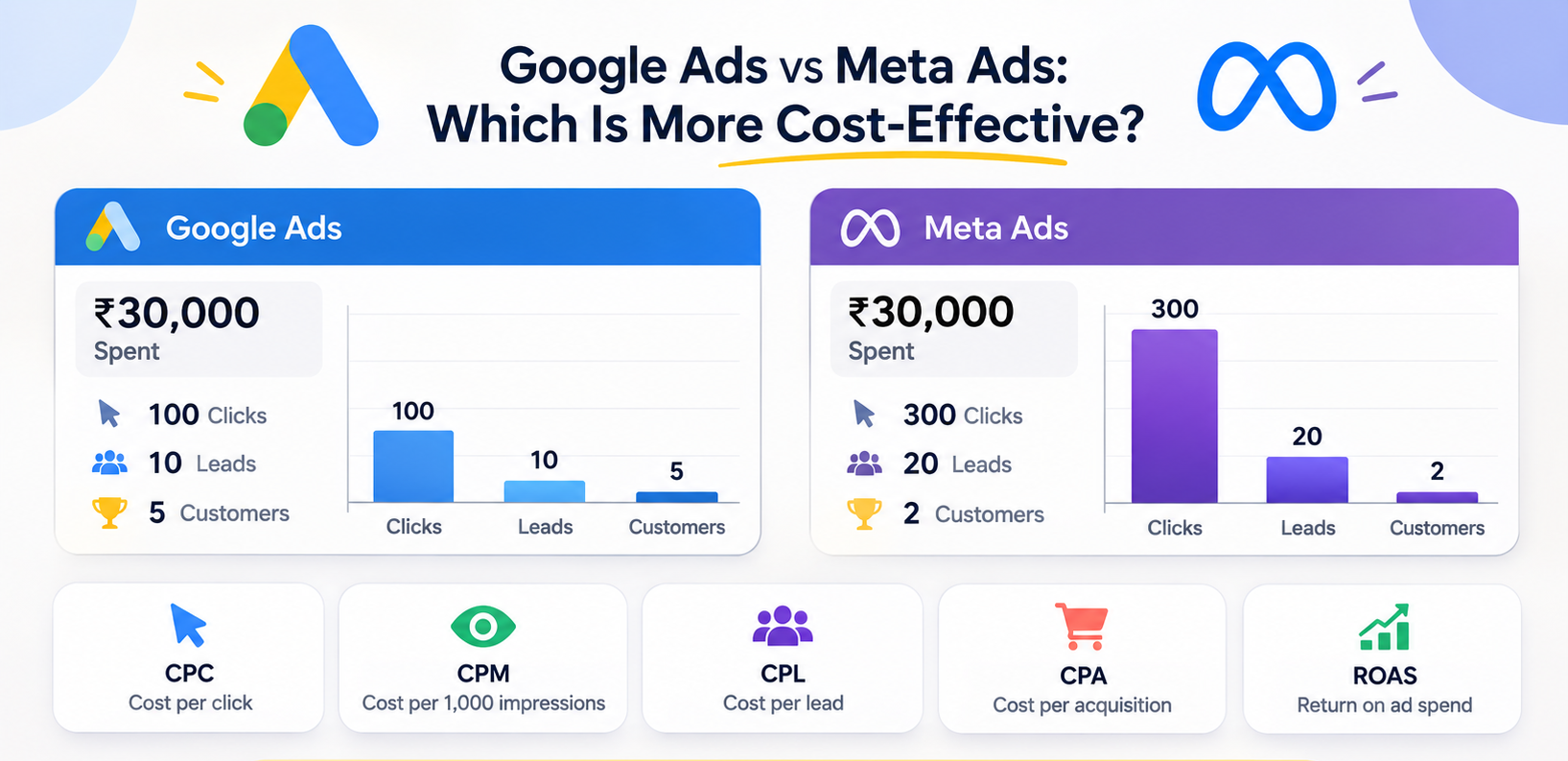
Consider a hypothetical example.
A business spends ₹30,000 on each platform:
Google Ads generates 100 clicks and 10 leads.
Meta Ads generates 300 clicks and 20 leads.
Meta Ads generates more clicks and leads. However, the business still needs to evaluate lead quality and actual sales before deciding which campaign performs better.
Suppose Google Ads generates five customers and Meta Ads generates two. Google Ads may deliver better customer acquisition efficiency despite receiving fewer clicks.
So, while choosing your platform, you should compare cost per qualified lead, customer acquisition cost, and revenue rather than choosing a platform based only on CPC.
Which Platform Offers Better Audience Targeting?
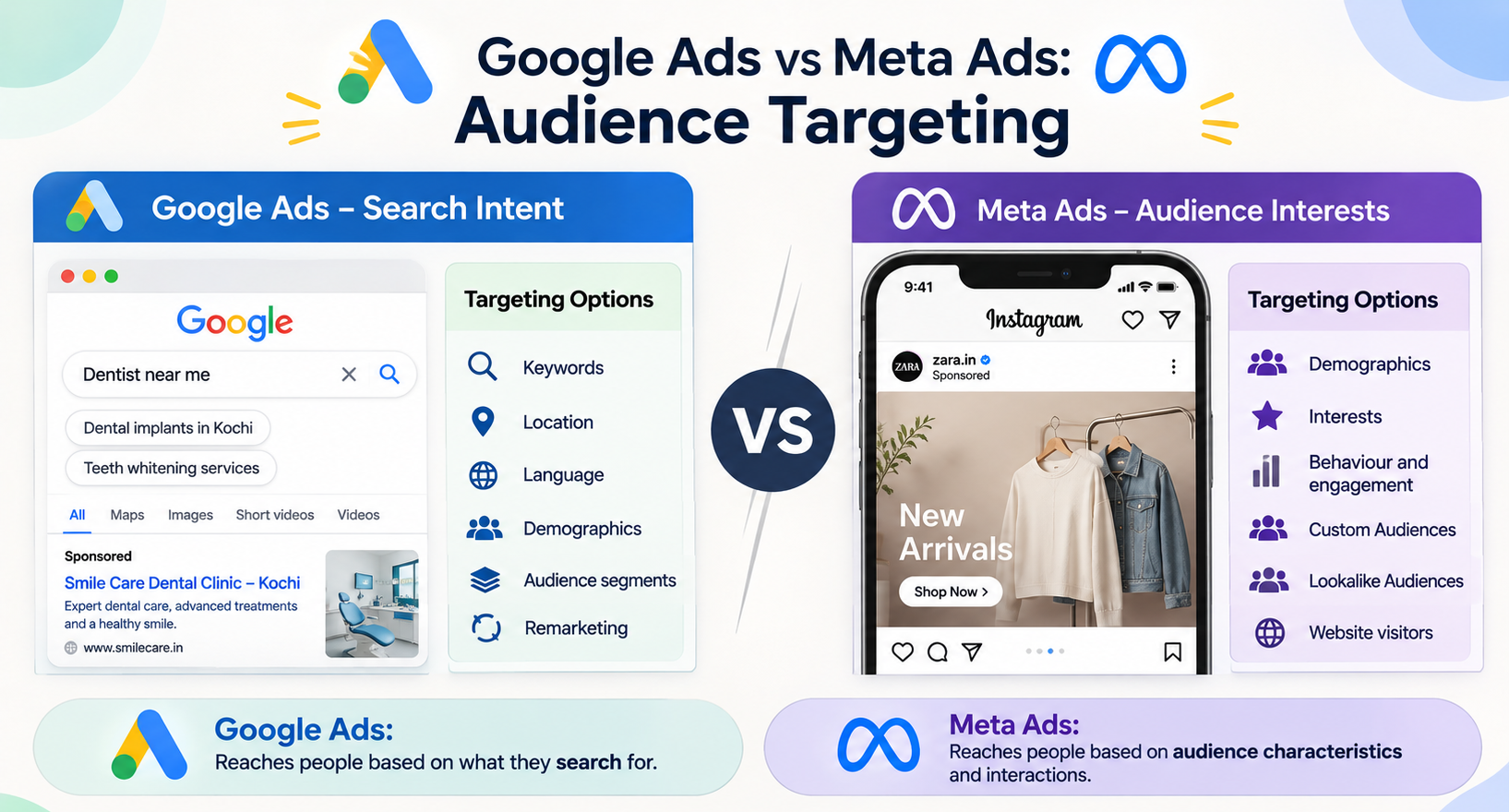
Google Ads and Meta Ads offer different targeting opportunities. The right option depends on whether a business wants to reach people based on what they search for or who they are likely to be.
Google Ads targeting
Google Ads is useful when businesses want to reach customers with specific requirements.
Its targeting options include:
Keywords and search terms
Geographic location
Language preferences
Demographic information
Audience segments
Remarketing lists
For example, a dental clinic in Kochi can target searches such as dentist near me, dental implants in Kochi and teeth whitening services.
This helps the clinic reach people who are already looking for dental services.
Meta Ads targeting
Meta Ads offers audience targeting based on available demographic, interest, behaviour and engagement signals.
Businesses can use:
Demographic targeting
Interest-based targeting
Custom Audiences
Lookalike Audiences, where available
Website visitor audiences
Customer engagement audiences
For example, a fashion brand can reach people interested in fashion, clothing and lifestyle content. It can also reconnect with people who have interacted with its Instagram account or website.
However, audience targeting does not guarantee buying intent. Creative quality, offer relevance and landing page experience also influence campaign performance.
What Are the Advantages and Disadvantages of Google Ads and Meta Ads?
Both advertising platforms offer useful opportunities, but each has limitations that businesses should consider before investing.
Advantages and disadvantages of Google Ads
Advantages | Disadvantages |
|
|
Advantages and disadvantages of Meta Ads
Advantages | Disadvantages |
|
|
The better platform is the one that supports the business objective without creating unnecessary acquisition costs.
Google Ads vs Meta Ads: Which Is Better for Different Businesses?
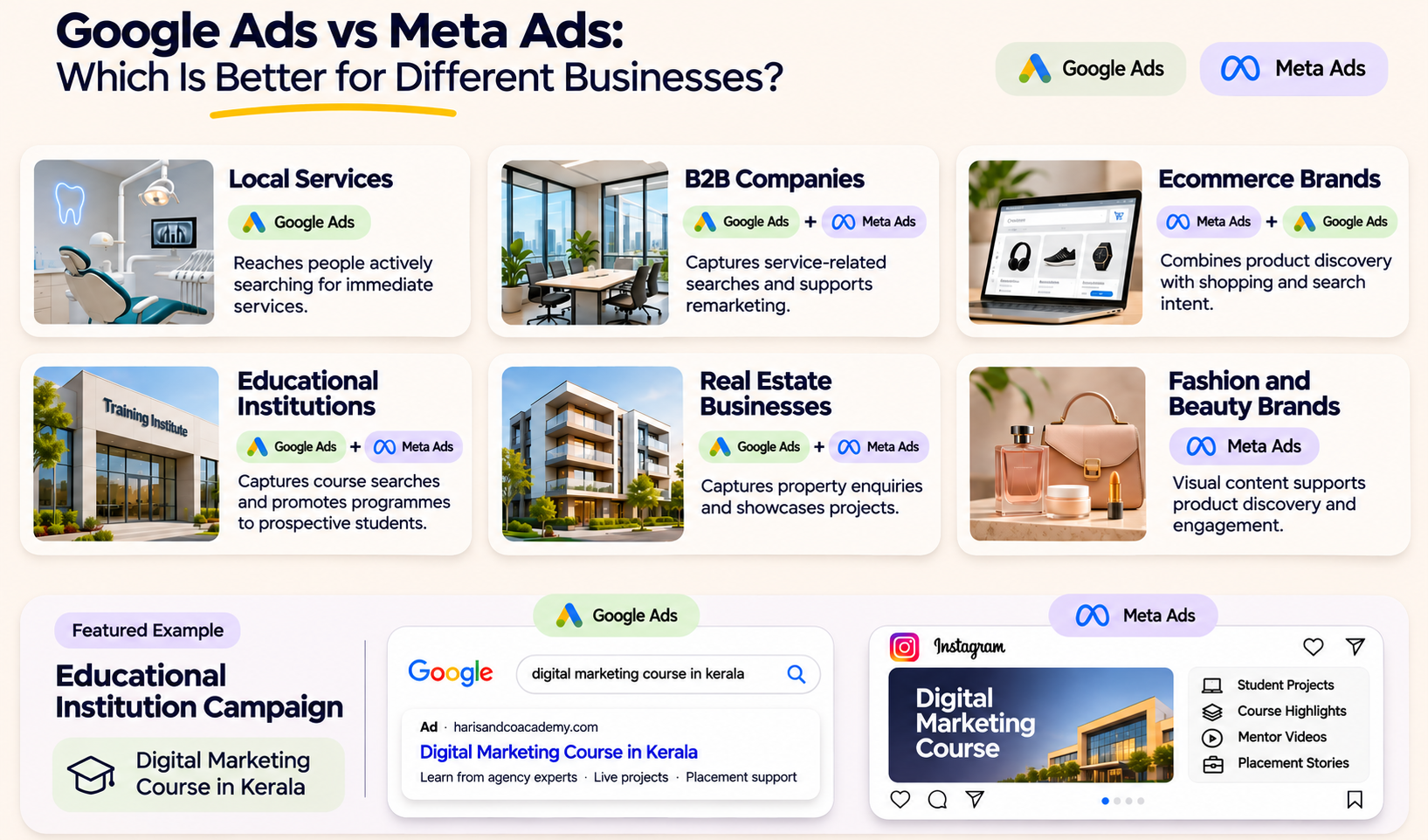
The right advertising platform changes according to the product, customer behaviour and buying journey.
Business type | Recommended platform | Reason |
Local service businesses | Google Ads | Reaches customers searching for immediate services |
B2B companies | Google Ads + Meta Ads | Captures service-related searches and supports remarketing |
Ecommerce brands | Meta Ads + Google Ads | Combines product discovery with shopping and search intent |
Educational institutions | Both platforms | Google captures course-related searches; Meta promotes programmes to prospective students |
Real estate businesses | Both platforms | Google captures property enquiries; Meta showcases projects and generates interest |
Fashion and beauty brands | Meta Ads | Visual content supports product discovery and engagement |
For example, an educational institution promoting a digital marketing course can use Google Ads to reach people searching for digital marketing courses in Kerala.
At the same time, Meta Ads can showcase student projects, course highlights, mentor videos and placement stories to reach potential students who are not actively searching.
Can You Run Google Ads and Meta Ads Together?
Yes, even running Google Ads and Meta Ads together can help businesses reach customers at different stages of the buying journey.
Instead of treating both platforms as competitors, businesses can use them as complementary advertising channels.
A practical approach includes:
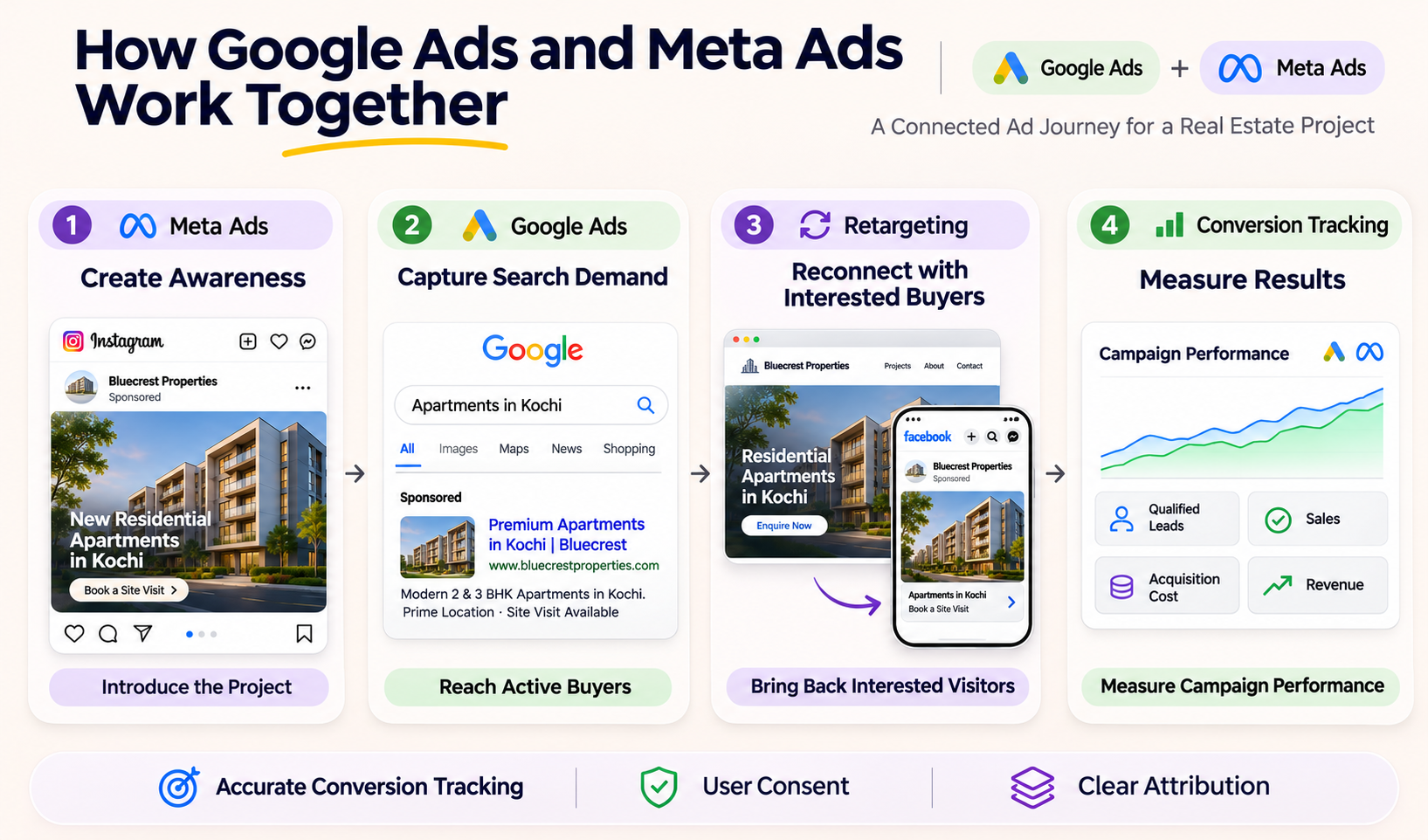
Create awareness through Meta Ads: Introduce the brand, product or service using relevant images, videos and offers.
Capture search demand through Google Ads: Reach people searching for the products or services being advertised.
Retarget interested audiences: Show relevant advertisements to people who have previously visited the website or interacted with the brand.
Measure conversions: Compare qualified leads, sales, acquisition costs and revenue across both platforms.
For example, a real estate company can use Instagram advertisements to introduce a new residential project. When interested buyers later search for apartments in the same location, Google Search campaigns can help the company reach them.
Retargeting can also bring back people who viewed the project details but did not submit an enquiry.
However, businesses should use accurate conversion tracking, appropriate consent mechanisms and clear attribution methods to understand how both platforms contribute to sales.
How Do You Choose Between Google Ads and Meta Ads?
Before selecting an advertising platform, consider these five factors:
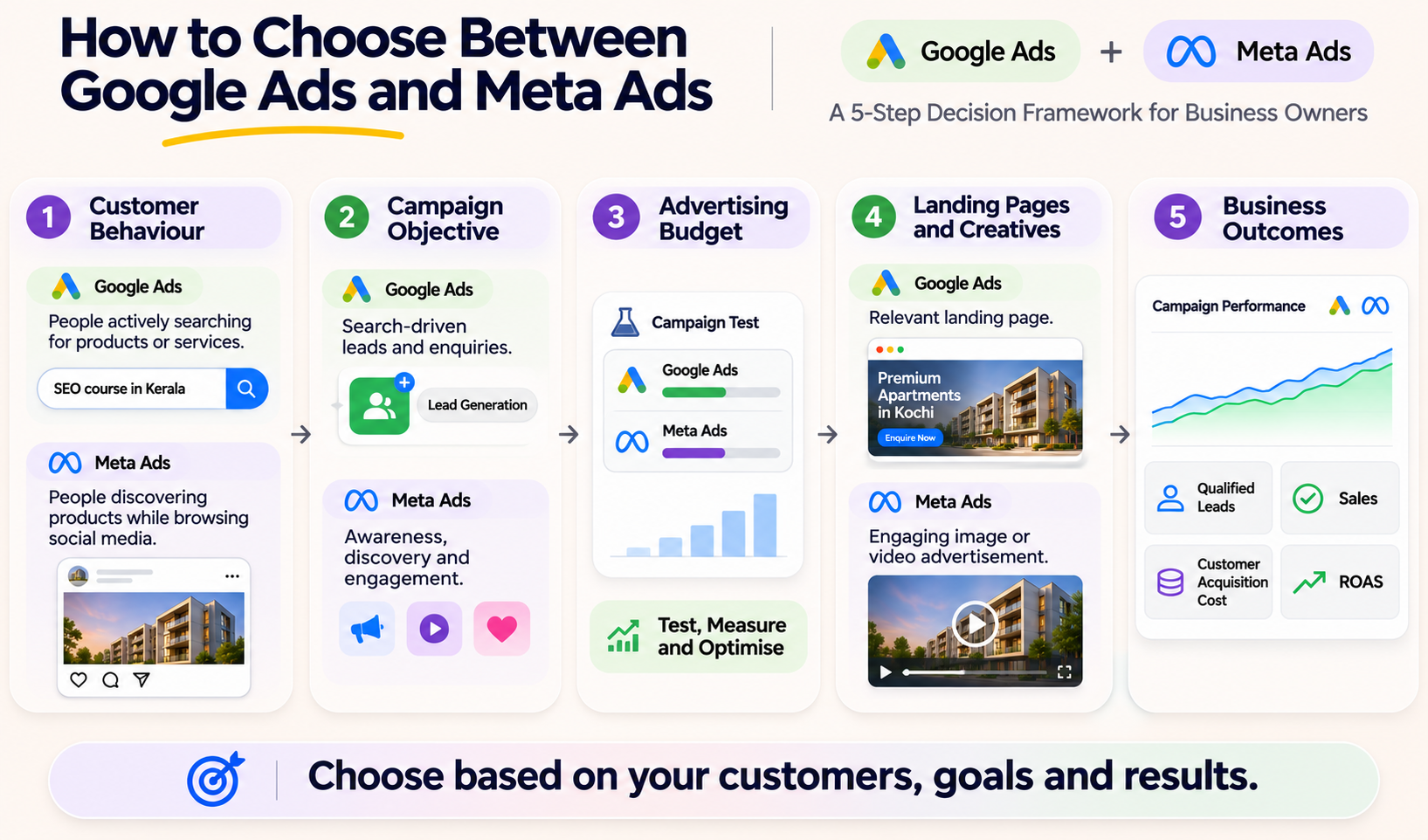
1. Understand customer behaviour. If customers actively search for your service, Google Ads may be the right starting point. If they need to discover your product, Meta Ads may offer better opportunities.
2. Define your campaign objective. Choose Google Ads for search-driven leads and Meta Ads for awareness, discovery, engagement and social-led conversions. Both support multiple objectives.
3. Evaluate your advertising budget. Allocate enough budget to test campaigns and collect meaningful performance data. Avoid dividing a small budget across too many campaigns.
4. Prepare relevant landing pages and creatives. Google Search advertisements need relevant landing pages, while Meta advertisements often depend heavily on engaging visuals and persuasive messaging.
5. Track actual business outcomes. Measure qualified leads, sales, customer acquisition cost and return on ad spend. Use the findings to improve your campaigns and budget allocation.
Conclusion
Google Ads and Meta Ads serve different purposes in digital advertising. Google Ads helps businesses connect with people actively searching for products and services, while Meta Ads creates opportunities to reach new audiences through Facebook and Instagram.
For businesses with clear search demand, Google Ads can be a strong starting point. For visual products, consumer brands and awareness campaigns, Meta Ads can offer valuable opportunities. Businesses with sufficient budgets can combine both to support different stages of the customer journey.
The key is to measure more than clicks and impressions. Track lead quality, customer acquisition costs and actual revenue to understand which platform contributes more to business growth.
However, understanding paid advertising is just one part of becoming a skilled digital marketer. A successful digital marketing strategy also involves SEO, content marketing, social media marketing, website optimisation and performance analytics. Learning how these channels work together can help you develop a broader understanding of digital marketing and its career opportunities.
If you want to explore these areas and build practical industry skills, consider enrolling in HACA’s Digital Marketing Course in Kerala, which covers different aspects of the field through practical learning and real-world projects.
