A title tag is one of the most powerful on-page SEO elements. It helps search engines understand your page and encourages users to click your website.
If your title is weak, your page may lose valuable traffic even if it ranks well.
A well-written SEO title improves visibility, increases click-through rate (CTR), and supports better search rankings. It also creates a strong first impression in search results.
In this guide, you will learn what title tags are, why they matter, and how to optimize them using proven SEO best practices.
What Is a Title Tag?
A title tag, also known as an SEO title or meta title, is an HTML element placed inside the <head> section of a webpage. It tells search engines and users what the page is about.
Google usually displays the title tag as the clickable blue headline on the Search Engine Results Page (SERP). Browsers also display it in the browser tab.
A clear title tag improves both search visibility and user experience.
Example:
<title>What Is a Title Tag? Complete SEO Guide | Your Brand</title>

Why Are Title Tags Important for SEO?
Google uses hundreds of ranking signals to understand and rank webpages, but the title tag continues to be one of the most important on-page SEO elements. It gives search engines a clear indication of what your page is about and helps users decide whether your content is worth clicking.
Title tags are particularly important when optimizing pages that need to establish strong relevance and trust. For topics that can significantly affect people's health, finances, or safety, understanding YMYL in SEO and its impact on rankings is equally important.
Even when Google chooses to rewrite a title in search results, the original title tag still helps it understand the context and topic of your page. A well-crafted title can also increase trust among users because it sets clear expectations about the content they'll find after clicking.
Benefits of Optimized Title Tags
Improve organic rankings
Increase click-through rate (CTR)
Improve topical relevance
Support semantic SEO
Enhance user experience
Strengthen brand visibility
Increase organic traffic
Improve search intent matching
How Does Google Use a Title Tag?
Google crawls your webpage, Google reads your title tag, Google compares your title with the user’s search query and Google decides whether your page matches the search intent. If your title clearly explains the page, users are more likely to click it.
Better titles often lead to better engagement signals.
Google may rewrite your title if it is:
Too long
Too short
Duplicate
Misleading
Keyword stuffed
Poorly formatted
What Makes a Great SEO Title?
A great SEO title is:
Clear
Relevant
Descriptive
Keyword-focused
User-friendly
Unique
Concise
Click-worthy
Every word should add value. So, you should avoid unnecessary words and focus on solving the user’s problem.
How Long Should a Title Tag Be?
Most SEO experts recommend 50–60 characters. Google measures titles by pixel width instead of character count. Keep your most important words near the beginning.
Good Example
Title Tag Optimization Guide for Beginners | Brand
Poor Example
SEO Title SEO Title Best SEO Title Guide SEO Title Optimization Tips SEO
The second example looks spammy and Users rarely click spammy titles.
How Do You Optimize Title Tags?
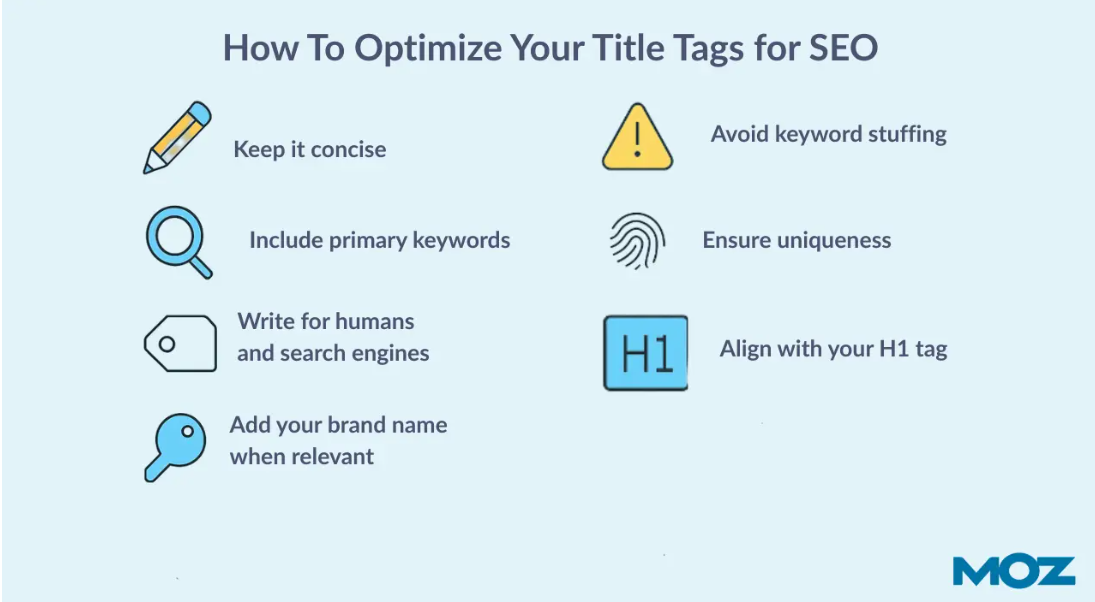
1. Use Your Primary Keyword Early
Place your target keyword near the beginning. Google understands the page topic faster. Users also notice it immediately.
Example:
SEO Title Optimization Guide
2. Match Search Intent
Search intent matters more than keyword density. Understand why users search. Create a title that answers their need.
Examples:
Informational
Commercial
Transactional
Navigational
3. Keep Every Title Unique
Every webpage needs its own title. Duplicate titles confuse search engines. Unique titles improve indexability. They also reduce keyword cannibalisation.
4. Write for Humans First
While keywords are important, your title should always sound natural to real people. Search engines have become much better at understanding context and content quality, which means overly optimized or robotic titles are far less effective than they once were.
Think about what would make someone stop scrolling and click your result. A title that clearly explains the benefit of the page and feels natural is much more likely to perform well than one overloaded with keywords. The goal is to create titles that are both search-engine friendly and genuinely useful for readers.
5. Add Power Words
Power words can make a title more compelling by creating curiosity, highlighting value, or emphasizing expertise. When used naturally, they can encourage more clicks without making the title sound exaggerated or clickbait.
Words such as Ultimate, Proven, Essential, Complete, Expert, Practical, and Advanced often work well because they communicate the depth or usefulness of the content.
Example:
10 Proven Title Tag Optimization Tips
6. Use Numbers When Relevant
Numbers can make titles easier to scan and often attract more attention in search results. They set clear expectations for readers and quickly communicate the structure of the content.
For example, titles such as 7 Proven Tips, 10 Best Examples, or 15 SEO Mistakes to Avoid immediately tell users what they will gain from the article, which can help improve click-through rates.
7. Include Your Brand Naturally
Place your brand name at the end.
Example:
SEO Title Guide | Your Brand
Skip branding if space is limited.
8. Use One Primary Keyword
Many website owners make the mistake of targeting multiple primary keywords within a single title. In most cases, this reduces clarity and makes the title appear unnatural.
Instead, focus on one primary keyword and support it with related terms where appropriate. This approach helps search engines understand the page topic more clearly while maintaining a natural reading experience for users.
Related Semantic Keywords
Including related terms throughout your content can strengthen topical relevance and help search engines better understand the subject matter. Some commonly associated terms include:
SEO title
Meta title
HTML title element
SERP headline
Organic CTR
Semantic relevance
Search intent
Pixel width
Indexability
Crawlability
Metadata
Search snippet
On-page SEO
Topical authority
Content optimization
These terms help improve semantic coverage without forcing additional keywords into the title itself.
What Are the Best Title Tag Examples?
Blog Article
What Is a Title Tag? Complete Beginner’s Guide
Product Page
Wireless Bluetooth Headphones | Brand Name
Local Business
SEO Services in Kannur | Digital Marketing Expert
Educational Guide
How to Optimize Title Tags for Higher Rankings
What Mistakes Should You Avoid?
Small mistakes can reduce rankings and traffic.
Avoid these common errors:
Keyword stuffing
Duplicate titles
Generic titles
Misleading titles
Missing title tags
Very long titles
Very short titles
Too many symbols
ALL CAPS writing
Irrelevant keywords
Should Your Title Tag Match Your H1?
Not necessarily. While your title tag and H1 should focus on the same topic, they don't have to be exactly the same.
The title tag is primarily designed for search engines and users browsing search results, whereas the H1 serves as the main headline visitors see after landing on your page. Because they serve slightly different purposes, you can tailor each one accordingly.
For example, your title tag might be optimized to attract clicks from search results, while your H1 can provide a more detailed or reader-friendly introduction to the topic. The key is to ensure that both remain relevant to the page content and include related keywords naturally, helping search engines and users clearly understand what the page is about.
How Can You Measure Title Tag Performance?
Monitor your SEO performance regularly. Use trusted SEO tools.
Recommended tools include:
Google Search Console
Google Analytics
Ahrefs
SEMrush
Screaming Frog
Yoast SEO
Rank Math
While title tags are an important part of on-page optimization, they are only one part of a successful SEO strategy. A strong website should also address technical SEO, including crawlability, indexing, site structure, page speed, and other technical factors.
For that, track these metrics:
Organic CTR
Impressions
Average Position
Organic Traffic
Bounce Rate
Engagement
Improve low-performing pages first.
Pro Tips for Better Title Tags
Follow these proven strategies:
Write naturally.
Focus on users.
Use emotional triggers carefully.
Include one target keyword.
Add a benefit.
Stay under 60 characters.
Make every title unique.
Review performance regularly.
Update outdated titles.
Conclusion
Title tags may seem like a small part of SEO, but they play a major role in how your pages perform in search results. A well-optimized title helps search engines understand your content, improves click-through rates, and encourages more users to visit your website.
By focusing on clear messaging, matching search intent, using relevant keywords naturally, and creating unique titles for every page, you can significantly improve your chances of attracting qualified organic traffic. Regularly reviewing and updating your title tags can also help maintain strong search visibility as user behavior and search trends evolve.
If you're serious about mastering SEO and learning how to optimize title tags, keyword strategies, technical SEO, content marketing, and other essential digital marketing skills, consider joining our Digital Marketing Course in Kerala. Through practical projects, industry-focused training, and expert mentorship, you'll gain the knowledge and hands-on experience needed to build successful digital marketing campaigns and grow your career with confidence.